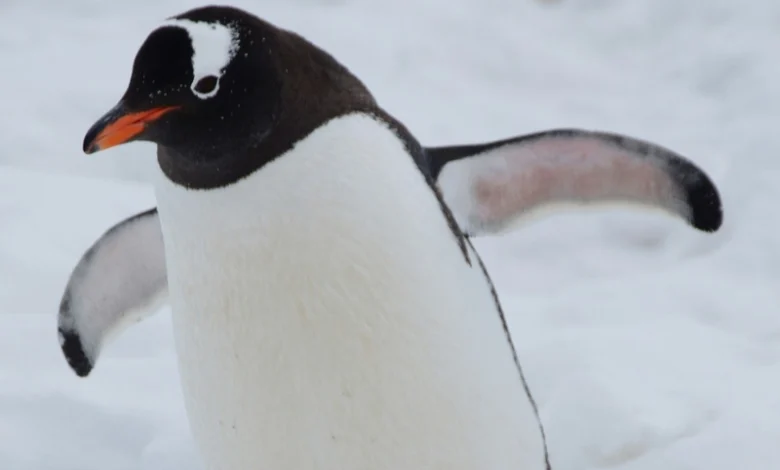
Penguins are loved for their funny walk, not their impact on the climate. But scientists now say penguin droppings may be pushing snowmelt in Antarctica along faster than expected. The link is a tiny plant-like organism living on the snow.
Droppings That Act Like Fertiliser
Penguins eat fish and krill, then leave the extra nutrients behind as guano. In crowded colonies penguin droppings it piles up in patches large enough for satellites to spot. Those nutrients seep into nearby snow, where snow algae grow far better than they would otherwise. It works much like fertilizer in a garden.
Why Darker Snow Melts Sooner
Clean white snow reflects most sunlight. Algae stains it green or red, and coloured snow absorbs more heat. Reports on the study say red snow takes in about 20 percent more energy than white snow, and green snow possibly 40 percent more.
To test the idea, a team led by Alia Khan at the University of Colorado Boulder collected snow from the West Antarctic Peninsula, both near penguin colonies and away from them. Green snow held much more phosphate, a nutrient common in guano. The work appeared in the Journal of Geophysical Research: Biogeosciences in October 2026.
Why It Matters for Climate Forecasts
Most climate models track air temperature and sunlight, but not living things. The researchers say ignoring this effect may mean we underestimate how quickly coastal snow disappears. As penguins move south in a warming world, they could carry their nutrients to new snowfields.
Penguins droppings are not the cause of Antarctica’s ice loss, though. The study covers surface snow on parts of the coast, and the big ice sheets are shaped by much larger forces. More research is needed before this effect enters official forecasts.
Keep Reading on Environmental Changes:
Is Food Security at Risk?
See how climate change threatens the food supply.
Can Renewables Deliver a Greener Future?
Weigh the promise and the limits.
Is healthy soil running out?
See why soil degradation threatens food supplies.
How Do Communities Fight Drought?
Meet the volunteers in Hungary building their own dams.
Will Countries Hit Food Goals?
Find out why most may miss 2030 targets.