Brown Tide, Empty Beaches: How Seaweed Is Sinking Tourism on Mexico’s Caribbean Coast
Mexico Sargassum Crisis is hurting Caribbean tourism, emptying beaches, reducing hotel bookings, and threatening local livelihoods across coastal regions.

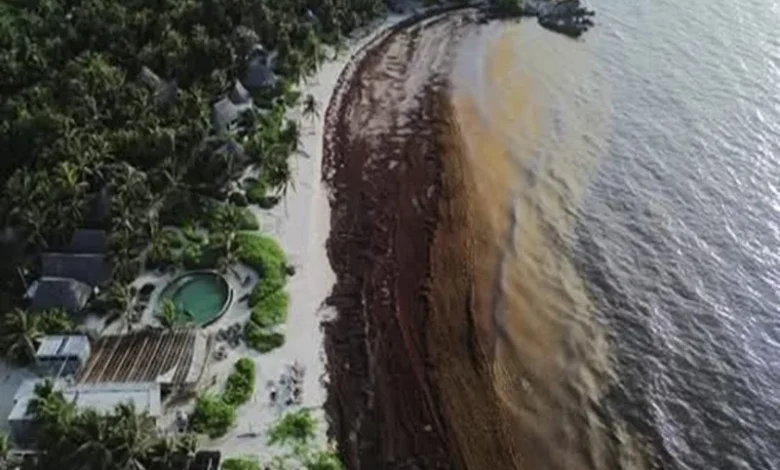
If you’ve ever dreamed of a Caribbean holiday, you know the picture: white sand, turquoise water, and a gentle breeze. That picture is in danger. Thick mats of a type of brown seaweed known as sargassum are accumulating on beaches along the Mexico’s Caribbean coast and 2026 is shaping up to be the worst year on record. This is an ugly view not just for local families who depend on tourism. It endangers their livelihood.
What Is Sargassum and Why Is It Deteriorating?
Sargassum is a type of brown algae that has been floating in the Atlantic Ocean for hundreds of years. In small quantities they are harmless and even useful, serving as a hiding and feeding place for fish and turtles. The trouble begins when vast floating rafts of it, sometimes called the Great Atlantic Sargassum Belt, drift toward the coast and pile up on the sand. When it rots in the heat, it releases hydrogen sulfide, the same gas that makes rotten eggs smell. Scientists say the main culprits behind the larger-than-normal blooms since 2011 are warmer ocean temperatures and nutrient runoff, much of it from farming and city waste that flows into rivers.
How Bad Will the 2026 Sargassum Season Be
The numbers this year tell the story. Quintana Roo, home to Cancun, Playa del Carmen and Tulum, has already cleared more than 83,000 tons of sargassum from its beaches in the first half of 2026 alone. In Playa del Carmen alone we’ve removed more than 30,000 tons. Tulum and Akumal, which face directly onto the open Atlantic, have been the hardest hit, with local officials describing the drop in visitors as “critical.” Hotel occupancy in the region has tumbled from last year and some resorts have already begun discounting room rates to lure guests who will accept the smell and the brown water.
The Human Cost Behind the Headlines
With normal families, this crisis is worse than a bad smell. Tourist footfall directly links to daily wages earned by beach vendors, tour guides, boat operators, and restaurant workers in towns like Tulum. Income like that vanishes with little warning when beaches close or visitors cancel trips. A bad sargassum season can mean real financial hardship, not just a quieter workday, for many workers in Mexico’s informal tourism economy, who lack formal contracts, savings accounts or insurance to fall back on.
What the Government Is Doing
The Mexican Navy has sent ships and hundreds of personnel to intercept sargassum at sea before it reaches the coast and the federal government is considering an emergency declaration that could result in more offshore barriers and cleanup crews. Also, the local hotels run daily cleanup crews on their private beaches, but this is an expensive ongoing battle, not a permanent fix.
What You Can Do
•Check real-time seaweed conditions before booking with tools like the Sargassum Monitoring site or SARGAZO app.
•Think of Playa Norte, or North Cancun and Playa Mujeres in Isla Mujeres, which are more geographically covered up.
•December-April is usually the quieter travel season; if you can try to avoid May-October.
•Ask hotels about their daily cleaning routine before booking.
•Travel dates can affect sargassum levels so be flexible.
A Concrete Takeaway
The sargassum isn’t going anywhere soon, nor is the pressure it puts on the people and businesses that depend on Mexico’s Caribbean coast. Smart planning by visitors and ongoing investment in cleanup are the strongest tools this region has to protect both its beaches and its livelihoods until stronger long-term solutions arrive.
Explore the latest climate and travel updates.
Where Can You Dine By Water?
Find the best waterfront restaurants with scenic views.
Which Regions Face Dust Storm Risks?
Uncover the areas most vulnerable to worsening storms.
Are Climate Tipping Points Nearing?
Dive into the latest scientific climate findings.
Why Are Coral Reefs Disappearing?
See how bleaching is impacting marine ecosystems.
Will Hurricane Risks Stay Lower?
Check out the latest NOAA Atlantic season outlook.