
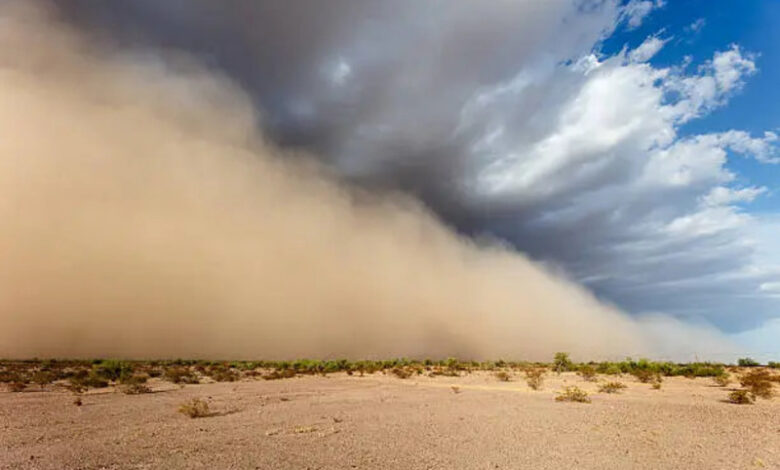
Dust storms around the world are on the rise as they become more frequent and intense. The primary factor for the increase in the number of dust storms is that there are an increasing number of areas with dry land that has lost its ability to hold onto moisture, leading to increased amounts of loose soil that can be blown away by the wind. Dust storms can have negative impacts on public health, agriculture, transportation systems, and ecosystems, in addition to causing poor visibility.
1. Sahara Desert (North Africa)
The Sahara Desert is considered to be the largest source of airborne dust on Earth. The Sahara is subject to very strong winds that blow across large portions of north Africa, Europe, and even across the Atlantic Ocean.
2. Middle East
In the Middle East, parts of Saudi Arabia, Iraq, Kuwait and Iran are frequently subject to dust storms caused by dry conditions as well as desert landscapes and powerful seasonal winds that blow across these countries.
3. Northern India
The regions in northern India of Rajasthan, Haryana and Punjab, and the Indian capital city Delhi, will frequently have a number of dust storms during the pre-monsoon season and result in poor air quality and an inability to see what lies ahead.
4. Central Asia
In Central Asia, Kazakhstan, Uzbekistan, and Turkmenistan have all increased their annual dust storms since they have been affected by drought and increased land degradation within these countries.
5. China and Mongolia
In China and Mongolia, the Gobi Desert produces extremely strong dust storms in the springtime that can travel great distances across northeastern China, South Korea, and Japan.
6. Southwestern United States
Dust storms in the southwestern United States (Arizona, New Mexico and Texas; also Northern California) happen frequently during dry hot spells.
7. Australia
Dry landscapes and long-term drought conditions have produced numerous dust storms through out eastern Australia, causing disruption to agriculture, as well as urban areas.
8. South America
Dust storm-generating dry regions are becoming increasingly susceptible to dust storms as a result of changing climatic conditions that decrease the amount of moisture in soil; therefore, dry areas of Argentina and Chile are affected.
Conclusion
Dust storms have been occurring outside of desert areas now more frequently than they were historically; in many areas, dust storms have been created by a culmination of climate change effects, land degradation and prolonged drought, as a result, several continents’ regions are experiencing environmentally and academically related air quality issues due to increasing levels of activity associated with air pollution, land management, and also early warning systems are going to be important elements of successful management of these issues going forward.
FAQs
Who is responsible for causing dust storms?
Dust storms are created due to strong winds carrying loose dry soil or dry soil particles high into the air from the surface creating large, dense clouds covering large areas of the Earth.
Will there be a rise in frequency from future dust storms?
Many cities around the country are now beginning to see the increase of frequency of dust storms resulting from many years of drought, continuing land degradation, and changes within the climatic condition.
What are some harmful effects of dust storms?
Dust storms can cause reduced visibility, will create problems for local transportation networks, can job pilgrims (produce respiratory illnesses) and may harm crops.
Where are the relative regional locations of India that experience the highest dust storm infiltration levels within the country’s relative geographic location of proximity to Edwards’ southern border (Mexico)?
The state of Rajasthan and the surrounding states are located within the Northern part of India.