
Why E20 Petrol is Officially Your New Reality and the Hidden Long-Term Cost for Older Engines!

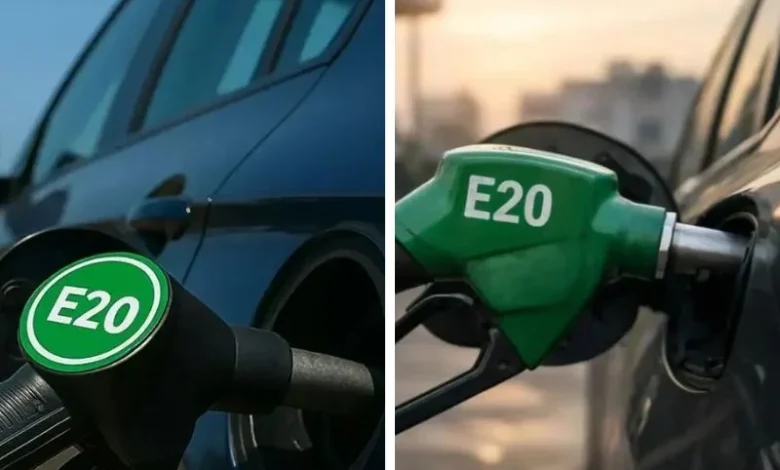
India’s transportation fuels are changing quickly; the latest addition to the fuel lineup will be E20 petrol (20% ethanol and 80% petrol). This change has been initiated through government policy initiatives aimed at reducing oil imports, reducing greenhouse gas emissions, and increasing domestic biofuel production.
For newer vehicles, this change will not create much of a change; however, millions of petrol cars and two-wheeled vehicles will face many questions regarding compatibility of E20, as well as longer-term vehicle longevity and engine wear-and-tear due to E20 use.
Why the Government Is Moving to E20
The rationale for government action is very simple; blending ethanol with petrol reduces the amount of crude oil that India imports and decreases the price of petrol for Indian consumers and businesses, while reducing some pollutants from the fuel. The increased usage of ethanol blended with petrol (“Ethanol-blended petrol” or E20) also helps to establish a stable and reliable market for agricultural feedstock (i.e., sugarcane and corn) used to produce ethanol.
From a long-term system, creating a solution for all regions in India that uses ethanol to become more independent is important because it can be done using existing engine designs (up to a certain extent within the guidelines set forth) and it doesn’t require a sudden shift to electric mobility overnight.
The Hidden Long-Term Cost for Older Engines
Pre-2020 model year and older engines may incur gradual damage from using an E20 fuel blend, even though E20 is currently deemed acceptable for use. The damage will occur gradually rather than instantly.
Material compatibility issues will arise with some rubbers, plastics and metals in the fuel lines or seals because ethanol is corrosive to certain materials, but this will depend on whether the fuel lines or seals have been designed to accommodate a high ethanol content.
Ethanol absorbs moisture (water) and will cause an increase in the amount of corrosion within the fuel system.
You may also experience a decrease in fuel economy when using E20 fuel as it has a lower energy density compared to gasoline.
The combustion of E20 fuel is different than that of gasoline. If your engine is not calibrated to run on E20 fuel, it will burn the fuel in a leaner state, which will ultimately affect your engine’s performance and efficiency.
Stay Ahead: Must-Read Insights for You
What Cooling Products Are Trending Now?
Discover the latest cooling products Hyderabad buyers are rushing to explore this summer.
Is Your Home Ready For Summer?
Check this simple checklist to prepare and explore ways to beat Hyderabad’s heat.
Which Hyderabad Areas Face Extreme Heat?
Explore the most heat-affected zones and discover how to stay safe during heatwaves.
How To Start Waste Segregation Easily?
Check this simple guide to explore effective waste segregation practices at home.
Is Hyderabad Facing A Water Crisis?
Discover how rapid urban growth is impacting water balance and explore solutions.
What You Should Do as a Vehicle Owner
Panic is not the appropriate response for a vehicle owner using an older vehicle that uses an E20 fuel blend, but rather, you should focus on preventative maintenance.
Schedule regular service appointments for your older vehicle, paying special attention to inspecting your vehicle’s fuel lines, injector(s) and seals.
Use the manufacturer’s specified oil, avoid long term fuel storage (which will worsen the moisture issue) and keep your fuel tank at least partially filled will help to minimize any associated risks with your engine using an E20 fuel blend.
Final Words
E20 petrol isn’t a future plan—it’s your present reality.
The shift is beneficial at a national level, but for individual vehicle owners, it comes with trade-offs that need awareness and adaptation.
FAQs
1. Can my current car run on E20 petrol?
Yes, most can—but older engines may face long-term wear if not designed for it.
2. Will mileage decrease with E20?
Slightly, due to ethanol’s lower energy content.
3. Is E20 harmful to engines?
Not immediately, but it can cause gradual issues in non-compatible engines.
4. Should I switch vehicles because of E20?
Not necessarily, but future purchases should take compatibility into account.