
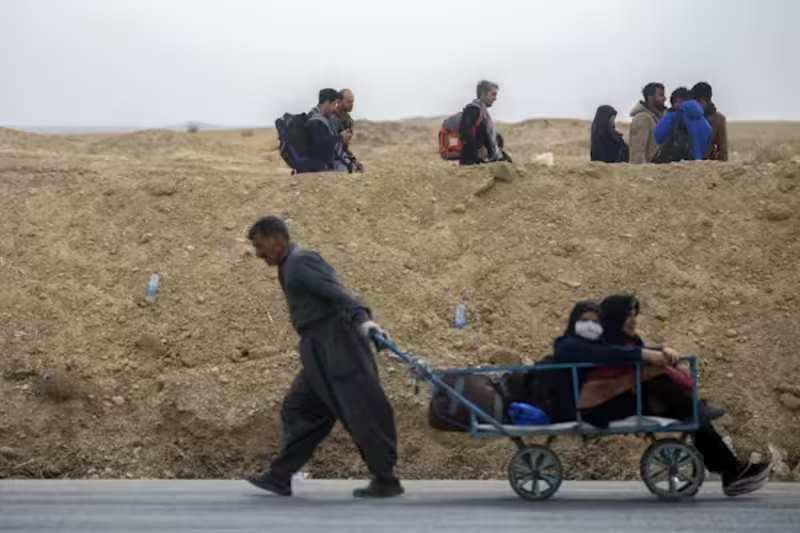
Climate change is forcing more people to leave their homes due to rising sea levels, extreme weather, and declining natural resources. While many people move within their own countries, others relocate across borders in search of safer living conditions and better opportunities. Experts expect climate-related migration to increase in the coming decades as environmental challenges grow.
Here are 10 key trends driving climate migration.
1. Rising Sea Levels: Coastal communities are relocating as flooding and erosion threaten homes and infrastructure.
2. Stronger Heatwaves: Extreme temperatures are making some regions more difficult to live and work in.
3. More Frequent Floods: Heavy rainfall and flash floods are damaging homes, farmland, and public infrastructure.
4. Longer Droughts: Water shortages and crop failures are forcing farming communities to seek new livelihoods.
5. Stronger Storms: Cyclones, hurricanes, and typhoons are displacing millions of people each year.
6. Declining Agricultural Productivity: Changing weather patterns are reducing crop yields, affecting food security and rural incomes.
7. Water Scarcity: Rivers, lakes, and groundwater sources are under pressure, increasing competition for freshwater.
8. Wildfires: Larger and more frequent wildfires are destroying homes and forcing evacuations in many countries.
9. Urban Migration: Many people are moving from rural areas to cities where they hope to find jobs, services, and more reliable infrastructure.
10. Government Adaptation Policies: Some governments are relocating vulnerable communities from high-risk coastal or flood-prone areas to safer locations.
Conclusion
Climate migration is becoming one of the biggest social and economic challenges of the 21st century. Investing in climate adaptation, disaster preparedness, resilient infrastructure, and sustainable water and food systems can help reduce displacement and protect vulnerable communities.
FAQs
What is climate migration?
It is the movement of people caused partly or entirely by climate-related events such as floods, droughts, sea-level rise, or extreme heat.
Is climate migration increasing?
Yes. More people are being displaced by extreme weather and environmental changes each year.
Which climate events cause the most displacement?
A: Floods, storms, droughts, wildfires, and rising sea levels are among the leading causes.
Do most climate migrants move to another country?
No. Most climate-related migration currently occurs within national borders.