
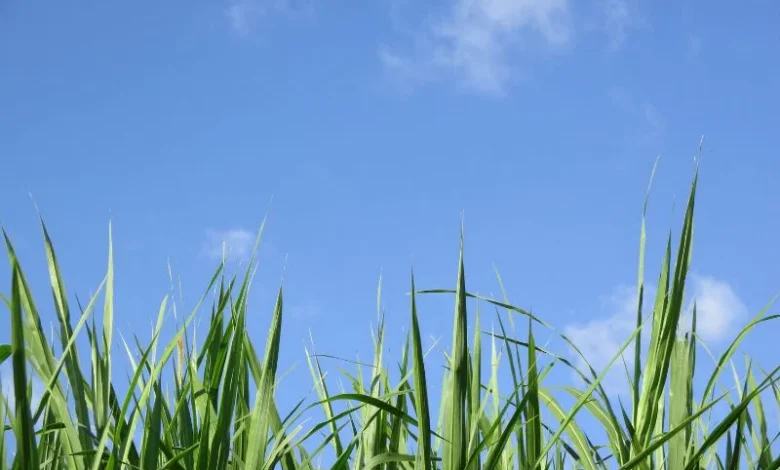
The biggest stories in the environment often begin with something as simple as a patch of grass by the road. A scientist in Kashmir got out of his car and looked down and saw something that didn’t quite belong. bioinvasion policy, That was African Bermuda-grass, not a species that should be found in the cool hills of the Himalayas. Its presence there tells you a lot about how an invasive species can establish itself in a new home for years, maybe decades, before any official person even notices.
How the Discovery Occurred
In fact the trail goes back to 1995. A forest officer in Tamil Nadu collected a sample of grass that looked very similar to the common local variety, but not quite. There was no way to tell it apart with confidence at the time so it sat unresolved. Another researcher spotted the same type of grass in 2024, near Tangmarg in Jammu and Kashmir. It just didn’t feel right. So the team dug through old records and compared it to a reference sample collected in Central Africa over a hundred years ago. And they finally had their answer. This was Cynodon nlemfuensis and it had already spread to both the Himalayas and the Western Ghats.
Why it took so long to see
Sadly, this kind of delay is not unusual. The average time between the first sighting of a naturalized species and its official confirmation is 27 years, sometimes more than a century. Few reasons keep coming up:
•Unless in flower, grasses are notoriously difficult to identify.
•The original specimens of reference required for comparison are often found in herbariums abroad and not in India.
•The local plant collections are still not adequately digitized.
•Taxonomic expertise is disappearing, as fewer people are training to become taxonomists today.
The Real Cost of Procrastination
None of it comes cheap. Between 1960 and 2020, the problem of invasive species in India has cost somewhere between 127 and 182 billion dollars, a figure closely linked to gaps in bioinvasion policy at the national level. It’s an inconvenient fact that researchers keep pointing out: that when a plant is useful (this grass is decent fodder for livestock), people tend to ignore the warning signs until the damage is done. Almost two-thirds of India’s natural ecosystems are currently under pressure from invasive plants.
What Needs to Change
The good news is that this grass hasn’t gotten out of control yet. It is found primarily along highways and disturbed patches of ground, not deep in the forest. That’s where the Early Detection and Rapid Response approach shines. A few practical steps could be truly impactful:
•Digitize plant collections so that identification does not take decades.
•Consider taxonomy as important biosecurity work, not an academic sideline.
•Create one clear agency responsible for coordinating the response to invasive species.
•Species tend to spread first on high-traffic routes, tourist areas and highways; watch these.
•Citizen science and AI tools to accelerate identification of unusual plants.
Conclusion
What this grass proves is quite simple, actually. The problem was never that nobody saw it. Somebody saw it in 95. The problem is how long it takes for a sighting to become confirmed action. That gap is where the invasives quietly win out. And any country that deals with biodiversity, which is pretty much all of us, needs faster ways of determining what’s growing before a roadside curiosity becomes a full-blown ecological headache.
Explore More: Discover the Ideas and Innovations Shaping Tomorrow
Which Technologies Will Transform Industries Next?
Discover the breakthrough technologies that could reshape traditional industries and the future of work.
Why Are Wetlands So Important Globally?
Explore the world’s most important wetlands and learn why they are vital for nature and humanity.
Can Innovation Improve Renewable Energy Reliability?
Check out the latest innovations making renewable energy cleaner, smarter, and more dependable.
Which Countries Lead Green Living?
Discover the 2026 ranking of the world’s greenest countries and their sustainability achievements.
How Are Cities Fighting Climate Change?
Explore the cities investing in climate-resilient infrastructure to