
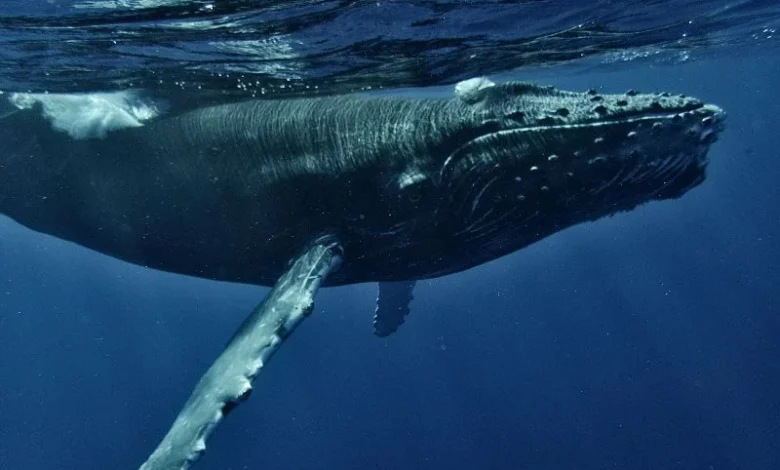
Somewhere in the warm, upwelling-rich waters of the Arabian Sea, a small group of whales has spent tens of thousands of years living apart from every other humpback population on the planet. Arabian Sea humpback whales, A freshly published genetic study now argues these whales deserve recognition as a separate subspecies, one that never picked up the habit of migrating, and one that is running out of time.
What Makes Arabian Sea Humpback Whales Different
Humpback whales around the world usually travel thousands of kilometres each year, moving from cold feeding grounds near the poles down to tropical waters to breed. The Arabian Sea population simply does not bother. They stay put year-round, leaning on strong seasonal coastal upwelling that pulls cold, food-rich water close to the coastline. This lets them feed and raise calves in more or less the same patch of ocean, a pattern barely seen in any other humpback group worldwide.
Genetic Evidence of a Separate Lineage
Researchers examined mitochondrial DNA pulled from over 2,000 humpback whales across several ocean basins, including samples gathered off Oman. What they found was a clear genetic split between this group and the three humpback subspecies already recognised in the North Atlantic, North Pacific, and Southern Hemisphere. The team puts the divergence somewhere between 43,000 and 113,000 years in the past. That long stretch of isolation also helps explain why this population shows the lowest genetic diversity recorded anywhere in the world for humpbacks, which is rarely a good sign for a small, cut-off group of animals.
Why This Population Is So Vulnerable
Threats From Fishing and Shipping
Living in isolation has left these whales biologically fragile. Field surveys near Oman found that roughly two out of every three whales photographed carried scars matching fishing net entanglement. Busy shipping routes running through the same waters only add to the risk, bringing vessel strikes and constant underwater noise that interferes with feeding and communication.
A Small Population With No Sign of Recovery
Conservation records show numbers have stayed low for at least two decades, with nothing pointing to real recovery. The IUCN Red List already classifies this group as an endangered subpopulation, a status that genetic isolation only makes more concerning.
A Regional Response Is Taking Shape
There is some good news here. The International Whaling Commission has backed a regional Conservation Management Plan built specifically for this population, pulling in fishing and shipping industries, national governments, researchers, and conservation groups from across the countries bordering the Arabian Sea. The plan’s main aim is better tracking and joint action to cut down entanglement and collision risks before they push numbers lower still.
Conclusion – Arabian Sea humpback whales
This quiet, non-migratory whale may turn out to be one of the most genetically distinct marine mammals left in our oceans, yet its future rests almost entirely on human decisions around fishing gear and shipping lanes. Supporting safer vessel routes, responsible fishing practices, and continued research into the Arabian Sea humpback whale gives this ancient lineage a real shot at surviving the century, rather than fading out before most people even learn it existed.
Coral reefs face a growing global threat.
Are Kelp Forests Disappearing Too Fast?
Check out why kelp forests are rapidly declining.
How Is UAE Helping Coral Reefs?
Find out how UAE labs protect coral reefs.
What Helps Coral Reefs Recover Faster?
Uncover what supports reef recovery after bleaching.
Why Are Reefs Collapsing Across Countries?
Track down how climate change drives reef loss.
How Widespread Is Coral Bleaching Today?
Reveal how severely coral ecosystems are affected.