
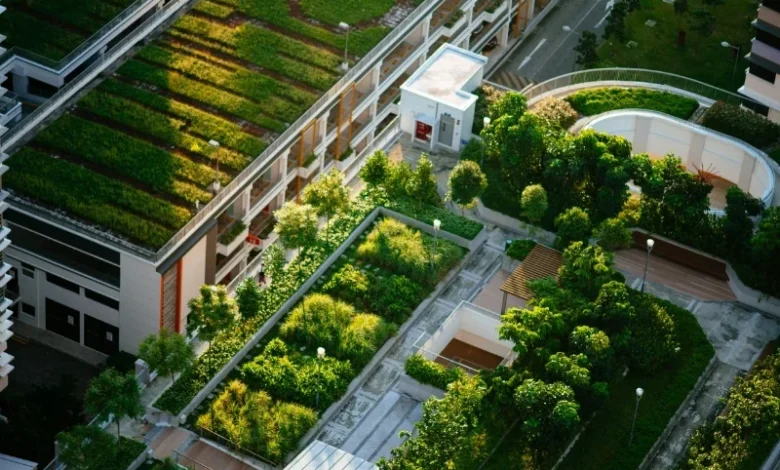
Anyone who has stood on a flat concrete roof in midsummer knows how fierce it gets up there. Now picture thousands of those roofs side by side. That is a big reason cities run hotter than the countryside. Green roofs are one practical answer. By planting a thin garden on a building, these rooftop gardens shade the surface, cool the air and ease the load on air conditioners.
What a Green Roof Really Is
Think of a green roof as a sandwich. At the bottom sits a waterproof layer, then drainage, then light soil, and finally the plants. Nothing fancy, but each layer has a job.
Two styles are common:
- Extensive: shallow soil, tough plants such as sedum and almost no upkeep.
- Intensive: deeper soil that can hold shrubs or vegetables, though it needs a stronger roof and more care.
Why Rooftop Gardens Make Cities Cooler
Dark surfaces store heat all day and release it slowly after sunset. Scientists call the result the urban heat island effect, and it is why city nights stay sticky. Plants break that cycle. Leaves block direct sun, and the water they release into the air carries heat away as it evaporates.
Some places now push the idea hard. Toronto requires green roofs on many large new buildings, and Singapore has run schemes to help owners pay for rooftop greenery.
Where the Savings Come From
A cooler roof means cooler rooms, so the air conditioner switches off sooner. That is how green roofs cut energy bills. Chicago’s City Hall garden is the classic example, and studies projected thousands of kilowatt-hours saved each year. Your own results will depend on climate, roof size and plants, so treat any figure as an estimate.
Costs are real too. Installation is pricier than a normal roof, and the structure must carry the weight of wet soil.
If you are tempted, start here:
- Ask an engineer whether your roof can bear the weight.
- Pick hardy plants that suit your local weather.
- Hire a roofer who knows waterproofing well.
- Check for local grants or tax relief.
Begin small, even with one section of roof. Over time you get a cooler building, a calmer neighbourhood and lower energy bills.
Related Reads on Climate and Nature
Will countries hit food goals?
Find out why most may miss 2030 targets.
Can growing food indoors help?
Weigh the pros and cons of vertical farming.
How healthy is our soil?
See why healthy soil is running out.
Is food waste a climate issue?
See how food waste adds to climate change.