Can Japan Turn Its Abandoned Golf Courses Into Solar Farms Without Harming Biodiversity?

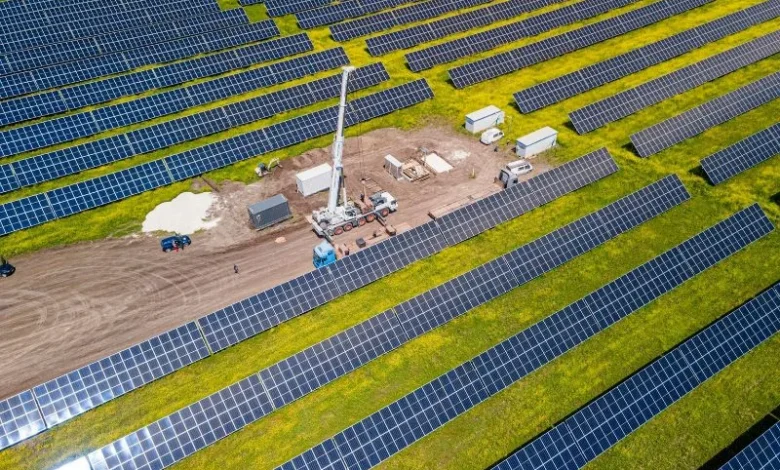
Japan constructed many golf courses during the economic boom in the 1980s, but many of them have since shuttered operations. Japan golf course solar farms, A Bloomberg investigation found that 9 percent of utility-scale solar capacity in Japan is on land that was formerly golf courses.
Why Golf Courses?
With Japan being an extremely mountainous country, flat land is hard to come by for solar farms. Old golf courses are typically free, flat and already connected to the energy grid.
What About Wildlife?
The removal of forests is a far more serious concern: smaller and medium size plants on their land have taken up at least 84.7 square kilometers of land by the year 2020. In a former golf course in a forested area in Gifu, a study found that there are 211 types of plants growing under the solar panels without the need for any seeds or herbicides.
What Needs to Happen Next? – Japan golf course solar farms
Scientists refer to this phenomenon as passive ecovoltaics: leave the land alone and allow nature to reclaim it. Japan’s forestry regulations have made it difficult to get permits for solar farms on forest land, but it is still possible to generate renewable energy responsibly on disturbances. Monitoring is important as one site is not proof for all.
You May Like It:
Can panels on water power the future?
Find out how floating solar could work.
What are heat pumps?
Learn how this quiet technology heats and cools homes efficiently.
Why is concrete a big emitter?
See how cement drives climate change.
What is the hidden cost of battery metals?
Read about lithium mining.
Is nuclear power part of the solution?
Weigh the case for nuclear energy.