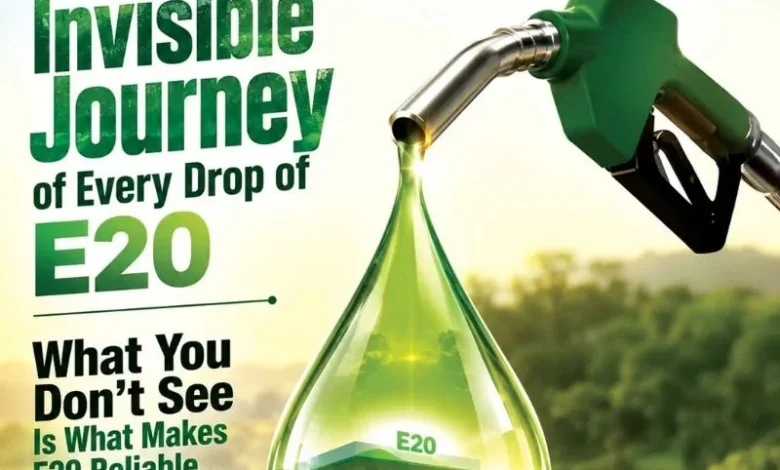
E20 ethanol blending India, India announced it has reached its target of 20 percent blending of ethanol with petrol five years earlier than anticipated according to NITI Aayog life-cycle analysis which says ethanol derived from sugarcane and corn has 50 percent to 65 percent less greenhouse gas emissions compared to petrol.
What Are the Concerns?
- Mileage: Government acknowledges some loss of 6 to 8 percent which can be fixed by tuning.
- Support: A LocalCircles survey found two-thirds of vehicle owners against E20.
- Water: Growing sugarcane requires 60 to 70 tonnes of water for one tonne of sugarcane.
- Food: Diverting rice and maize raises questions regarding food security.
What Is The Government Saying?
The government claims that the mileage loss of 30 percent pertains to less calorific value of ethanol and not to any real driving experience or rupture of engines. The government further refutes the claim that 10,000 litres of water is used for producing one litre of ethanol.
So, Is It Eco-Friendly? – E20 ethanol blending India
Depends on the feedstock. How the crops are grown and processed determines the total amount of emissions created over the life of the product. Experts say we should ramp up our ethanol production from agricultural waste, rather than food crops.
Keep Reading on Environmental Changes:
Is Food Security at Risk?
See how climate change threatens the food supply.
Can Renewables Deliver a Greener Future?
Weigh the promise and the limits.
Is healthy soil running out?
See why soil degradation threatens food supplies.
How Do Communities Fight Drought?
Meet the volunteers in Hungary building their own dams.
Will Countries Hit Food Goals?
Find out why most may miss 2030 targets.