New Crocodile Species Discovered in the Same Stone Used to Build Egypt’s Great Sphinx

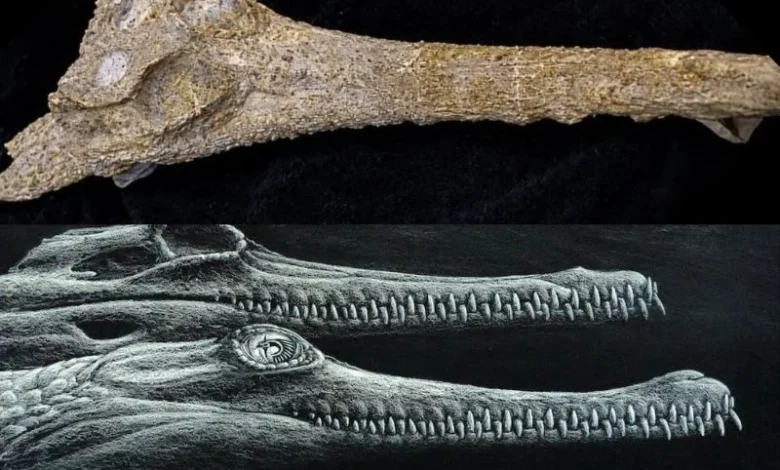
Nearly 45 million years ago, long before the pyramids rose from the desert, a long-snouted crocodile swam through a warm, shallow sea in what is now northern Egypt. Ancient crocodile species, When it died, its bones settled into limestone rock. Thousands of years later, that same limestone was quarried and carved by ancient Egyptians into the Great Sphinx. Now, researchers have confirmed that the fossilised animal belongs to a species never recorded before.
A Fossil Hiding in Plain Sight for a Century
The fossils were first dug up in the 1920s from Egypt’s Mokattam Formation, the very rock layer connected to the Sphinx. At the time, scientists assumed the remains belonged to the living false gharial, since the two looked similar on the surface. For almost 100 years, that assumption stood unchallenged.
An international team from the UK, Sweden, Germany and Egypt, led by researcher Paul Burke, decided to re-examine the old bones using modern CT scanning technology. The scans revealed hidden details inside the skull that set this ancient reptile apart as something new to science. The species has now been named Herugavialis cairensis, after the Egyptian god Heru, a figure some believe inspired the Sphinx itself. Fittingly, the fossil skull is missing the tip of its nose, just like the Sphinx’s own damaged face.
Why This Discovery Matters Today
Herugavialis belonged to a group called gavials, long-snouted crocodilians that once lived almost worldwide. Today, only two close relatives survive:
- The gharial, found in India and Nepal, listed as critically endangered
- The false gharial of Southeast Asia, listed as endangered
Both species face pressure from hunting, harvest for folk medicine and changes to the rivers they depend on. Yet crocodilian conservation has also shown real progress. When the Crocodile Specialist Group formed in 1971, every crocodilian species was considered endangered or threatened. Today, more than half are listed as species of least concern, largely because local communities were given economic reasons to protect rather than hunt them.
India began breeding gharials in the 1970s and set up the National Chambal Sanctuary. Recent counts there show the highest gharial population recorded since conservation work began. In the United States, the American alligator made a similar comeback after strict hunting bans, growing from near disappearance to nearly five million animals today.
In Egypt itself, only the Nile crocodile remains. The country now bans killing, capturing or trading crocodiles, though poaching and smuggling still occur in some areas.
Conclusion – ancient crocodile species
This discovery does more than add one name to the fossil record. It connects a creature that vanished from the Mediterranean millions of years ago to one of humanity’s most iconic monuments, and reminds us how closely ancient history and the natural world are carved together, quite literally, in stone.
Coral reefs face a growing global threat.
Are Kelp Forests Disappearing Too Fast?
Check out why kelp forests are rapidly declining.
How Is UAE Helping Coral Reefs?
Find out how UAE labs protect coral reefs.
What Helps Coral Reefs Recover Faster?
Uncover what supports reef recovery after bleaching.
Why Are Reefs Collapsing Across Countries?
Track down how climate change drives reef loss.
How Widespread Is Coral Bleaching Today?
Reveal how severely coral ecosystems are affected.