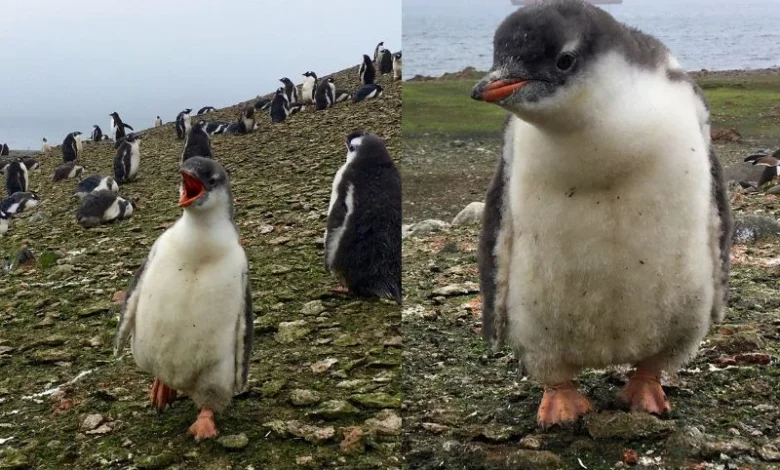
For the first time in more than a hundred years, scientists have officially named a brand new penguin species. It lives on the remote Kerguelen Islands, nearly 2,000 miles from any permanently settled land, and this new discovery is changing what people thought they knew about one of the planet’s most familiar seabirds.
How Scientists Uncovered a Hidden Penguin Species
For decades, the gentoo penguin was treated as a single species spread across the southern oceans. Birds from different islands looked almost identical, with the same orange beak and white underside, so few people questioned whether they were actually different animals.
That changed when researchers from Chile and the University of California, Berkeley, studied the complete genetic makeup of 64 penguins collected from ten breeding colonies. Their results, published in the journal Communications Biology, showed something nobody expected. What looked like one species was actually four separate ones.
Three of these were already known to science as subspecies, but the genetic evidence was strong enough to classify them as full, independent species. The fourth had never been identified before at all. Found only on Kerguelen Island, and likely on nearby Heard Island, it now carries the scientific name Pygoscelis kerguelensis, known as the southeastern gentoo.
Scientists describe this kind of find as a cryptic species, meaning the animal looks nearly the same as its relatives on the outside, while its DNA tells a completely different story underneath.
Why This Discovery Matters Around the World
Naming a new species is more than a scientific formality. It has real consequences for how these birds are protected.
- Three of the four gentoo species live on isolated sub-Antarctic islands where warming oceans are already changing the environment.
- These islands fall under the authority of several different countries, including France, South Africa, Australia and Chile, meaning protection depends on shared responsibility.
- Climate projections suggest that by 2050, some of these island populations could lose most of their usable habitat, with very few nearby places to relocate.
- The one species based mainly in Antarctica, the southern gentoo, may actually benefit as its range pushes further south.
Researchers involved in the study say that treating all gentoo penguins as a single widespread population had hidden how vulnerable the smaller island groups truly are. A shrinking colony on a remote island can easily go unnoticed when it is counted together with millions of birds living elsewhere.
A Bigger Lesson Hidden in a Small Island
What makes this story stand out is how long it took to reach an answer. The gentoo penguin had been debated by biologists for over a century, and it took a full genetic survey covering nearly its entire range to finally settle the question.
The same genetic dataset is now being used for something else entirely, studying how penguins respond to bird flu, a disease currently spreading among wild bird populations worldwide. Identifying which groups carry natural resistance could help researchers step in before a population reaches crisis levels.
Conclusion
The discovery of the southeastern gentoo penguin on the Kerguelen Islands proves that nature still holds surprises, even in animals people assume have already been fully studied. As remote island habitats face growing pressure from a warming climate, identifying and understanding each species individually gives conservation efforts a far better chance of actually working. Protecting wildlife always starts with knowing exactly what exists in the first place.
Discover smarter ways to go green.
How Can You Cut Emissions?
Check out simple ways to reduce your footprint.
How Much Energy Does AI Use?
Find the hidden environmental costs.
Which Small Habits Make Difference?
Uncover easy actions with big impact.
How Green Is Film Production?
Dive into cinema’s environmental footprint.
What Are The Best Eco Steps?
Explore practical ways to lower emissions.