Switzerland’s Glaciers Shrink by 20% in Just Five Years, Raising Global Climate Concerns

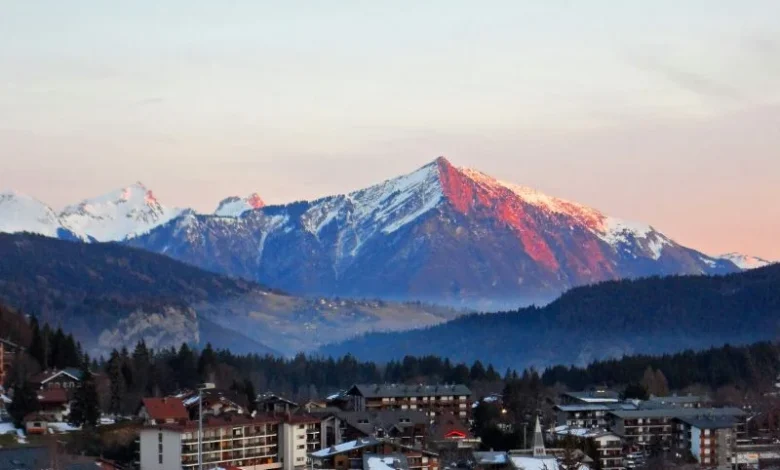
Ask most people what comes to mind when they think of Switzerland, and snow-covered peaks usually top the list. Swiss glaciers shrink, That image is slipping away faster than anyone expected. A new report has confirmed that Swiss glaciers have lost close to a fifth of their ice in just five years. For a country built around its mountains, that’s not a small statistic to shrug off. It’s a preview of what climate change can do to landscapes people once assumed were permanent.
What the New Report Found
Researchers from the Swiss Glacier Monitoring Network, working alongside the Swiss Academy of Sciences, checked 23 glaciers across the country in September 2026. The numbers weren’t subtle. Glaciers lost 5.5 percent of their ice volume this past year, which brings the total loss since 2021 to nearly 20 percent. In some spots, the edges of glaciers thinned out by up to 10 metres over a single summer.
At the Scex Rouge glacier, scientists had drilled a measuring pole into the ice earlier in the year. By the time they returned, three metres of it were sticking out, exposed. That’s at an altitude above 3,000 metres, the kind of height where ice used to hold steady year after year.
Why Is This Happening
Two things combined to cause this, and neither one alone would have done this much damage:
- A winter that barely delivered snow, leaving glaciers without the insulating layer they usually rely on
- A summer that turned into the hottest on record in Switzerland, part of a broader pattern of glacier melting showing up across European mountain ranges
Without snow cover to reflect the sun’s heat, the bare ice took the full force of the season’s temperatures. That’s what pushed the melt so far past anything considered normal. What researchers are now documenting is Switzerland’s shrinking glaciers moving at a speed nobody was forecasting even half a decade ago.
Why This Matters Beyond Switzerland
It’s tempting to treat this as a local problem, but it isn’t. Between July and September this year, glaciers released roughly 2.2 trillion litres of meltwater, more than four times what every household in Switzerland drinks in a year. That water doesn’t just disappear. It runs into rivers, then oceans, adding to the sea level rise that coastal cities far from any mountain range are already contending with.
There’s also the economy to think about. Tourism employs close to 4 percent of Switzerland’s workforce, and much of it rides on snow and glacier scenery. On top of that, glacier meltwater fills the reservoirs behind hydropower dams. Less ice now means less dependable water and electricity later.
What Experts Say Can Still Be Done
Nobody studying this is pretending the situation is hopeless, but the window is narrowing. Cut emissions quickly, and roughly a third of Switzerland’s remaining glacier ice could still be saved. Keep warming on its current track, and more than 90 percent of that ice could be gone by 2100.
A Few Practical Takeaways for Readers
- Remember that glacier loss touches water supply and sea levels far beyond mountain regions
- Rely on established climate monitoring reports rather than headlines alone
- Back policies, local or national, that push for real cuts in carbon emissions
- Check in on glacier data from credible scientific sources, because even a tenth of a degree of warming makes a measurable difference
Conclusion – Swiss glaciers shrink
What’s happening to Switzerland’s glaciers isn’t confined to the Alps. It’s a glimpse of how fast a warming planet can unravel systems that took thousands of years to settle into place. How much ice survives the next few decades comes down to decisions on emissions being made, or avoided, right now.
More stories on extreme weather.
Why Is Bangladesh Facing Flood Risks?
Find the latest climate insights.
What’s Driving India’s Weather Split?
Check out the extreme weather patterns.
Is Sonamarg Travel Safe Today?
Get to know the latest advisory.
How Severe Are China’s Floods?
Browse the latest emergency updates.
Why Is Northeast India Flooding?
Uncover the unusual jet stream effects.