River-Linking Lessons: Why the Ken-Betwa Project Needs a Rethink Before It’s Too Late

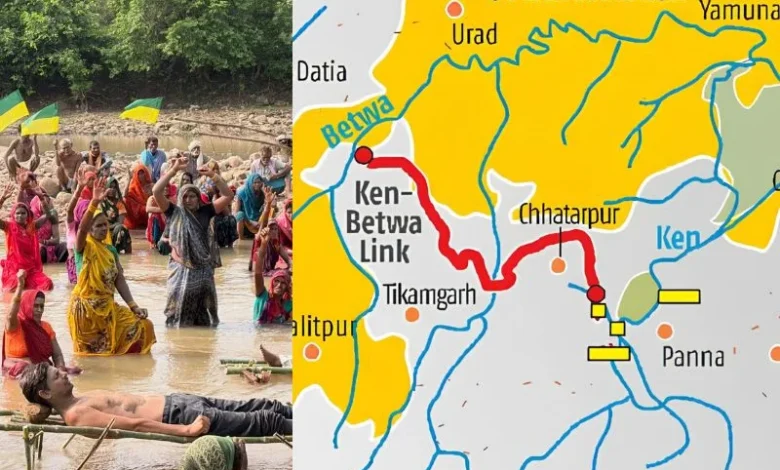
Moving water from one river to another sounds simple on paper. Take water from a “surplus” river, send it to a “deficit” one, and the shortage is solved. Ken-Betwa river-linking project, But rivers aren’t pipes. They’re living systems shaped by rainfall, rock and slope over centuries. India’s Ken-Betwa river-linking project, which plans to move water from the Ken basin to the Betwa basin through a dam and canal, rests on this exact assumption. Similar projects elsewhere suggest that assumption doesn’t always hold up.
What the Ken-Betwa Project Actually Involves
The plan involves a dam and a canal running over two hundred kilometres, carrying water between two river basins in central India. The goal is to ease drought pressure in a region that genuinely struggles with water scarcity. But the Ken and Betwa don’t share the same rainfall pattern, rock formations, or seasonal flow. Treating them as interchangeable oversimplifies what is actually a delicate inter-basin transfer.
Global Experience with River Linking
Several countries have attempted similar transfers, and the results are worth noting:
- China’s large-scale transfer scheme has caused pollution spread, reduced downstream flow, and rising coastal salinity.
- Pakistan’s transfer canals have caused waterlogging across farmland.
- Water projects in the western United States have faced high costs, ecological decline, and drought worsening in the source rivers.
- South Africa and Namibia have both reported habitat disruption after comparable transfers.
This isn’t bad luck. It’s a pattern. Solving one water problem through engineering often creates another one downstream, sometimes years later.
Why This Matters Beyond India
Water stress isn’t unique to India. Communities from the Middle East to sub-Saharan Africa to the American Southwest face the same pull toward moving water long distances. It looks efficient on a map, but rivers rarely follow the blueprint. Once a river’s natural rhythm is disturbed, the cost usually lands on farmland, fisheries and forests downstream, including areas like the Panna Reserve Forest that sit directly in this project’s path.
A Quick Checklist Before Any River-Linking Project Moves Ahead
- Study each river’s rainfall and geology separately
- Assess impact on forests, wildlife and fish habitats early
- Involve independent researchers, not only project engineers
- Review global case studies before committing funds
- Plan for climate variability, not just current water levels
Conclusion – Ken-Betwa river-linking project
Rivers aren’t leftover water waiting to be redirected. The global record on river-linking shows that good intentions don’t guarantee good outcomes. Before more water is diverted anywhere, the Ken-Betwa lesson holds: study the river first, build second.
Explore More: Discover the Ideas and Innovations Shaping Tomorrow
Which Technologies Will Transform Industries Next?
Discover the breakthrough technologies that could reshape traditional industries and the future of work.
Why Are Wetlands So Important Globally?
Explore the world’s most important wetlands and learn why they are vital for nature and humanity.
Can Innovation Improve Renewable Energy Reliability?
Check out the latest innovations making renewable energy cleaner, smarter, and more dependable.
Which Countries Lead Green Living?
Discover the 2026 ranking of the world’s greenest countries and their sustainability achievements.
How Are Cities Fighting Climate Change?
Explore the cities investing in climate-resilient infrastructure to