Kati Thanda-Lake Eyre: Location, Size and Biodiversity of Australia’s Great Salt Lake
Discover Kati Thanda-Lake Eyre's location, size and biodiversity, Australia's lowest point and a desert wetland that bursts into life after rare floods.

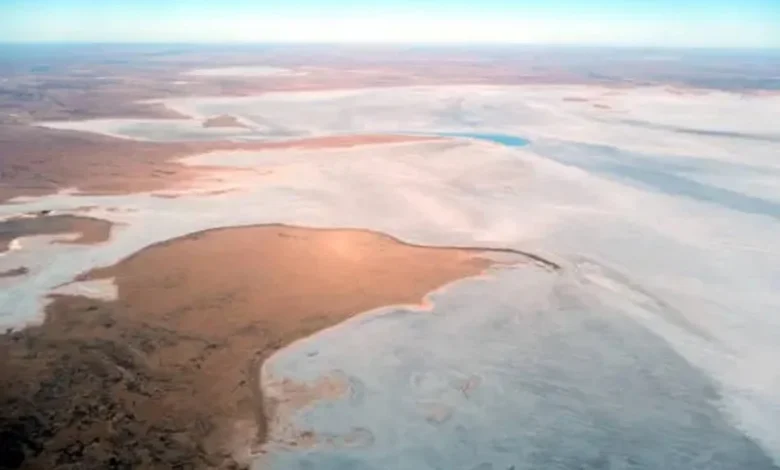
For most of the year the Kati Thanda-Lake Eyre is just a cracked white desert. But this remote salt lake in the South Australian outback is one of the world’s most fascinating and mercurial natural wonders. When the rare floodwaters come, this quiet basin is transformed into a vibrant wetland teeming with life and is a source of fascination to scientists, travellers and nature lovers the world over.
Where is Lake Eyre Kati Thanda?
Kati Thanda-Lake Eyre is located in South Australia.The lake is located in the arid interior of South Australia, some 700km north of Adelaide. It is near the town of Marree and is part of the much larger Lake Eyre Basin, a huge internal drainage system that does not flow to the ocean. It’s not an easy day trip—you can only access it by 4WD tracks or scenic flights.
How big is Lake Eyre?
In fact, Kati Thanda is two basins that have joined together. Lake Eyre North is 144 kilometres long and 77 kilometres wide, and Lake Eyre South is 64 kilometres by 24 kilometres. The lowest point of the lake bed is at 15.2 meters below sea level (the lowest natural point in Australia). The Lake Eyre Basin itself is some 1.2 million square kilometers—almost one sixth of Australia.
Biodiversity: Life After the Flood
Lake Eyre is hardly ever full. It has been filled to capacity only 3 times in 160 years. But when the water does arrive, the change is dramatic:
•There are millions of waterbirds, including pelicans, silver gulls and banded stilts.
•The lake is an important breeding ground for species tolerant to high salinity.
•Desert rivers fill waterholes where plant and fish life thrive for a short period.
•There’s always a bust after a boom, as the lake evaporates back into salt and dust.
The whole ecosystem is geared for this boom and bust and any disturbance to river flows from mining or water extraction upstream throws the natural balance out.
The Short Story: Lake Eyre
•Location: outback South Australia. Marree.
•Size: Salt pan of about 9,700 square kilometers.
•Lowest point: 15.2 m below sea level.
•Biodiversity: is high, only in rare years of flooding.
Conclusion
Kati Thanda-Lake Eyre is teaching us that in the most arid of places there is incredible life just waiting for the right moment to bloom.
Your Next Nature Stories Start Here
Could Biodiversity Loss Get Worse?
Check out the latest global wildlife crisis and its growing impact.
Can Nature Goals Reverse Biodiversity Loss?
Find out how global nature goals could restore biodiversity by 2030.
Why Does Biodiversity Matter For Climate?
Uncover how biodiversity conservation can strengthen climate solutions.
What Do Bird Songs Reveal?
Dive into the surprising biodiversity secrets hidden in bird songs.
Why Is Brazil Biodiversity’s Global Crown?
See why Brazil remains the world’s most biodiverse country in 2026.