Why No Two Snowflakes Are Ever Alike: The Hidden Physics Behind Every Falling Crystal’s Journey
Every snowfall hides unique science as Snowflake Physics reveals why no two crystals match.

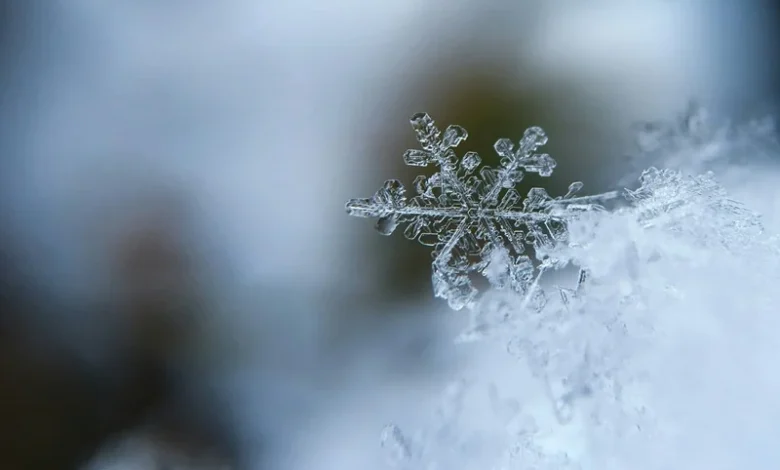
From the mountains of Japan, the plains of Canada to the hills of Northern India, almost every part of the earth experiences snow. But scientists have never seen two snowflakes with the same pattern. It is not a myth. That’s basic physics, and knowing this helps us understand the quiet complexity hiding inside every winter storm.
What Actually Happens Inside a Cloud
A snowflake starts as a bit of dust or pollen floating about in a cold cloud. This speck freezes a tiny six-sided ice crystal of water vapour. From this simple beginning, as the crystal falls, it begins to develop arms and branches and tiny ridges.
Why Every Snowflake Follows a Different Path
The basic idea is as a crystal falls down it passes through pockets of air that are slightly different in temperature and humidity. Each pocket influences the growth rate and direction of the ice. Since no two crystals fit through the same sequence of air pockets, no two crystals will be the same shape.
This is sometimes called the sky’s “butterfly effect,” in which a small change at the beginning leads to a totally different outcome at the end.
A few reasons why the pattern is never repeated:
The real temperature at each level of the cloud.
The amount of moisture in at any given time.
The crystal’s direction and rate of tumbling down.
little glitches that happen randomly as the ice is forming.
Why This Still Matters in Everyday Life
This is not a simple science trivia question. Farmers need to know how snow crystals form and settle to track snowfall patterns . Ski resorts need to know to track snow quality. Water authorities need to know because they rely on snowmelt for drinking supply. The amount and form of the snowpack in places such as the Himalayas or the European Alps is directly responsible for the spring water supply for millions of people.
Quick things to think about:
•A single snowflake may consist of as many as 200 ice crystals stuck together.
•The shape of a crystal may be simple (such as a plate) or complex (such as a star), depending on temperature.
•Some of the most complex, delicate patterns are born in the coldest, driest air.
Fast way to check for yourself
If you live where it snows, you can try this at home:
•Catch falling snow on a black glove or piece of dark fabric.
•Use a magnifying glass or zoom in on your phone camera.
•Compare a few flakes side-by-side in a few seconds, before they melt.
Conclusion
The next time you’re caught in a snowstorm, remember that every flake has its own little journey through the clouds. The physics of temperature, moisture and time make it virtually impossible for any two crystals to be the same. That is the miracle of winter’s silence. A blizzard of billions of flakes, not one of them alike. Look closely and you are looking at nature’s signature, rewritten with every snow.
More Nature Stories
Why Visit Thailand’s Hidden Gems?
Find peaceful escapes beyond the usual tourist spots.
Why Are Glaciers Melting Faster?
Uncover the growing water risks across the Himalayas.
How Is Ladakh Rapidly Changing?
See how climate is reshaping mountain heritage.
Can Tourism Help Protect Kashmir?
Explore simple ways to travel more responsibly.
Why Are Mountain Heatwaves Increasing?
Dive into the science behind rising temperatures.