Wings of Wonder: How Derbyshire Brought White Storks Home After 600 Years
White Storks Derbyshire return after 600 years as conservation and wetland restoration help restore wildlife and inspire global recovery efforts today.

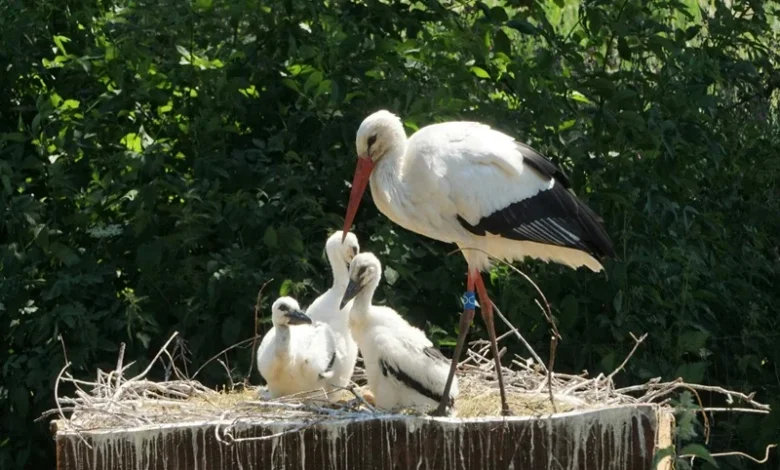
No matter where you live, it’s worth pausing to consider the idea of a bird disappearing for 600 years and then quietly coming home again. white storks have returned to Derbyshire, in England’s Midlands, the large bird famous around the world for its part in folklore about new-born babies. To the locals it feels less a wildlife update and more folklore stepping back into real life. Three young birds have taken up residence in purpose-built accommodation at a nature reserve Willington Wetlands, in central England.
Why These Birds Went Away
White storks were once widespread in Derbyshire, as they still are in parts of Europe, Africa and the Middle East, where the species migrates each year. They became extinct in England about the 14th century largely because of the draining of wetlands for farming and hunting the birds as food. Whole generations grew up without ever seeing one overhead. Until now they were creatures of folklore, not of the countryside.
A Community-Backed Revival
It was made possible thanks to more than 300,000 pounds or around 380,000 dollars (US), from the Veolia Environmental Trust, a UK scheme that funds environmental projects from contributions by the waste industry. The birds were reared by breeding specialist Celtic Rewilding in partnership with local conservation charity Derbyshire Wildlife Trust before being released. The new enclosure is surrounded by an electric fence to exclude foxes and minks and fine netting to prevent disease and smaller predators from reaching the storks. But it’s a carefully watched start, not a release into the wild.
Part of a Larger, Global Pattern
Derbyshire is far from alone. More stork projects are planned for Sussex, Devon and London. Similar efforts around the world are returning wolves to Europe, beavers to North America, and native forests to Asia and Latin America. Each relies on local funding and volunteers, showing that species recovery does not require a large national budget. It can start in any place with a single wetland and one community.
The Next Step
•Watch the first three storks for health and behavior.
•Evaluate adaptation before releasing more birds.
•Promote natural breeding in the enclosure.
•Start releasing it in a controlled way into the open reserve.
Conclusion
The return of storks to Derbyshire is a small, local event with a message that travels far beyond England. It shows that lost wildlife can come back even after six hundred years if there is community, money and patience. If you live by a river in South Asia, a coastline in Africa, or a forest in South America, the lesson is the same: one protected patch of land at a time, recovery is possible.Storks are flying over Derbyshire again, a sign that patience and local action can undo centuries of loss.
Explore incredible wildlife destinations worldwide!
Where does wildlife recover after disasters?
Find how nature responds after major earthquakes.
Why visit Kaziranga for wildlife?
Discover what makes this park a top destination.
Which creatures thrive in backwaters?
Explore Kerala’s rich wetland wildlife and birdlife.
What makes Mongolia’s parks unique?
Uncover rare desert wildlife in protected landscapes.
Where can rare wildlife be spotted?
Browse India’s best national parks for wildlife adventures.