
Brahmaputra Basin Under Water: Inside Assam’s Worsening Monsoon Flood Emergency
Brahmaputra Basin Flood has displaced thousands in Assam as heavy monsoon rains trigger widespread flooding, relief efforts and urgent evacuations.

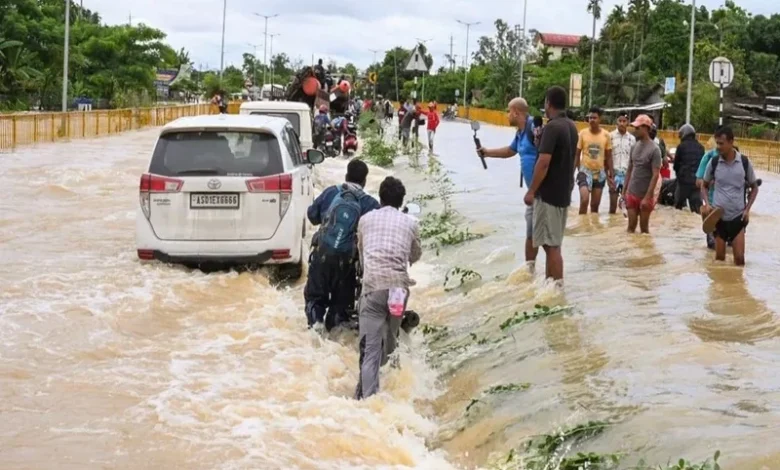
Assam is again under water. Heavy rain this monsoon season has pushed the Brahmaputra River far beyond safe limits, and the human cost is mounting by the day. Officials say at least 50 people have died and about 700,000 residents have been displaced, with nearly 300,000 now living in relief camps throughout the state.
Why the Brahmaputra is flooding again
The Brahmaputra is one of the major rivers of Asia, originating in Tibet and flowing for approximately 900 kilometres through Assam. Every monsoon, the river swells with rainwater and snowmelt, but this year the surge has been especially severe. Nearly 900 villages have been submerged, over 7,000 homes have been cut off from power and even Guwahati, the capital city of Assam with a population of about 2 million people, had waist-deep water on its streets this week. Scientists cite a familiar culprit: climate change is making South Asia’s monsoons less predictable, with intense rain bursts interspersed with dry spells, rather than the steady seasonal pattern of the past.
A flood season that will only get worse
This isn’t a one-off disaster. Assam gets flooded almost every year but the scale is increasing. The 2024 monsoon has claimed over a thousand lives across India, with Assam being hit hard early in the season. The state already has 273 relief camps running and disaster response teams, including the army, NDRF and SDRF, have rescued over 6,000 people so far, with more rain expected through late July.
What Assam Residents Can Do Today
Flood control is a government responsibility, but families living in low-lying areas can take practical steps to reduce risk:
•Follow the flood alerts issued by the State Disaster Management Authority and local district administration.
•Keep emergency cash, ID documents and medicines in a waterproof bag, ready to go.
•Move livestock and stored grain to high ground before water levels rise significantly.
•Register early with your nearest relief camp instead of waiting until roads are cut off.
•Wherever possible, use mobile banking apps or UPI, as flooded areas lose access to physical bank branches often.
•Have a charged power bank, as electricity outages are common during flooding.
Systems of Support Already in Place
The Assam government has ramped up relief efforts, with food supplies, medical camps and helicopter drops to villages cut off. The Assam State Disaster Management Authority and the local panchayats also coordinate the rescue of boats and temporary shelters. These systems aren’t perfect, but they’re working and worth using instead of weathering a flood alone.
Conclusion
The Brahmaputra basin flood emergency reminds us that climate disasters are no longer rare events for Assam; they are turning into an annual test of survival. While families cannot control the rain, early registration with relief services, basic emergency planning and staying informed through official alerts can make a real difference between hardship and tragedy. It’s safer to prepare before the water rises than after the water rises.”
More stories on extreme weather.
Why Is Bangladesh Facing Flood Risks?
Find the latest climate insights.
What’s Driving India’s Weather Split?
Check out the extreme weather patterns.
Is Sonamarg Travel Safe Today?
Get to know the latest advisory.
How Severe Are China’s Floods?
Browse the latest emergency updates.
Why Is Northeast India Flooding?
Uncover the unusual jet stream effects.