

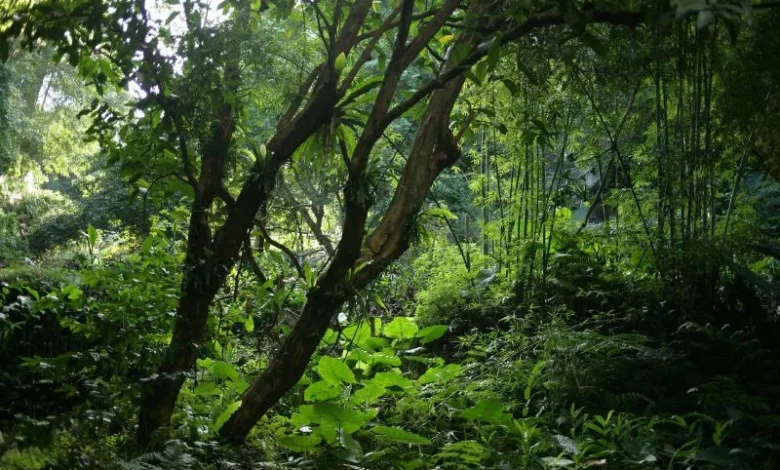
Walk through the hills of India’s Western Ghats and you will notice something odd. sacred groves drive forest restoration, Some of the oldest, tallest trees are not inside any government reserve at all. They stand in small forest patches called sacred groves, left alone for generations because villagers believe the trees belong to local gods and ancestors. A recent study suggests these groves are doing far more than just surviving. They are raising the next generation of forest.
What the Study Actually Found
Researchers examined 82 large old trees spread across four sacred groves and the villages surrounding them. Their question was straightforward: where do young trees actually take root and live?
The answer was not close. Saplings of one native palm grew beneath 91 percent of grove trees, but only 47 percent of village trees. For a large-seeded tree that depends on hornbills to spread its seeds, the difference was even sharper, 77 percent inside the groves against a mere 5 percent in the villages.
Why such a gap? Groves are simply left alone. No grazing cattle, no cleared brush, no daily foot traffic. So when birds drop seeds under a big tree, those seeds get room to grow.
Why Old Trees Carry So Much Weight
A tree that grows thick and tall stops being just another plant in the forest. It becomes something birds and larger animals actually depend on for nesting, shelter and food. Those birds then carry seeds far past the grove’s edge, feeding regeneration across the wider landscape.
This has weight beyond India. Countries everywhere are pouring money into forest restoration to fight climate change. This research hints that protecting old trees and community-run patches of forest may achieve more than planting rows of new saplings ever could.
Simple Steps Readers Can Take
- Learn whether a sacred grove or community forest exists near your own region
- Support grassroots groups already working alongside village communities
- Question projects that replace old grove land with concrete structures or shrines
- Share findings from real research rather than repeating assumptions
- Push local authorities to formally recognise community-protected forest land
A Tradition Under Strain
These groves are not safe by default. Stone shrines are increasingly being rebuilt as concrete temples, and that construction damages root systems and clears the forest floor these trees need. Add to this the steady migration of younger villagers to cities, and traditional knowledge of these forests is fading with them.
Conclusion
The Western Ghats groves prove something worth remembering: conservation does not always require fences or funding. Sometimes belief, passed down through generations, protects a forest better than any law could.This low-key, community-driven approach to forest regeneration is worth serious attention in a world looking for climate solutions.
More stories on extreme weather.
Why Is Bangladesh Facing Flood Risks?
Find the latest climate insights.
What’s Driving India’s Weather Split?
Check out the extreme weather patterns.
Is Sonamarg Travel Safe Today?
Get to know the latest advisory.
How Severe Are China’s Floods?
Browse the latest emergency updates.
Why Is Northeast India Flooding?
Uncover the unusual jet stream effects.