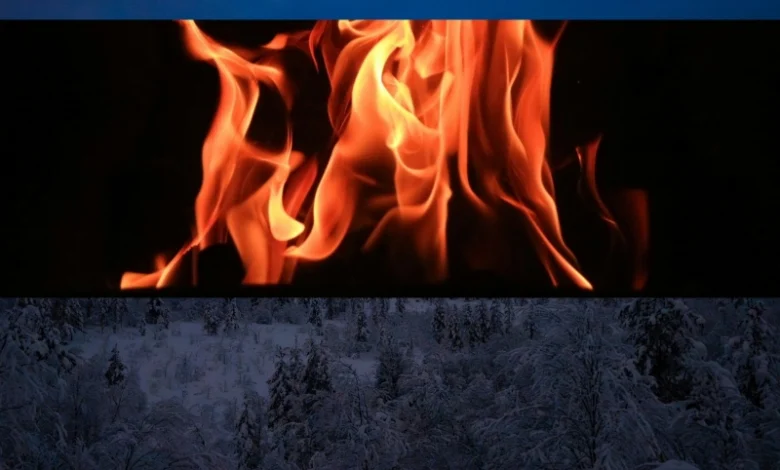
Arctic wildfires used to be thought that fires occurring in the vicinity of the Arctic Circle were uncommon. In fact, still burned through the past two decades, up to 207 teragrams of carbon is released on average each year.
The Value of the Fact.
The carbon trapped in Arctic soils is estimated to exceed 1.4 trillion tonnes, which is over twice the amount present in the atmosphere. One of the explanations of the emission of more carbon by fires (Arctic wildfires) is that burning peat and melting permafrost occur simultaneously.
What Are Zombie Fires?
Fires can burn in peat under the ground for prolonged periods of time, making them possible to re-ignite after snow melts. Such fires are referred to as zombie ones and made a considerable contribution to the emissions of 244 million tonnes of CO2 made by fires in the Arctic Circle in August 2020.
What Did 2026 Bring?
In 2026, record emissions were recorded due to smoke coming from Siberia. In North America, emissions occurred mostly in Canada while Alaska and Yukon recorded the lowest number of fires since 1977 due to extreme heat.
Related Reads
What do weather alerts mean?
Decode yellow, orange and red warnings.
Is Antarctic ice disappearing?
Find out why it matters beyond the poles.
Are Himalayan glaciers melting?
See what it means for South Asia’s rivers.
Why are cyclones strengthening faster?
Read about rapid intensification and why it matters.
Is the Amazon near a tipping point?
Learn how close diebacks really are.