New Snake Species Found in Ethiopian Highlands: Meet the White-Throated Egg-Eater

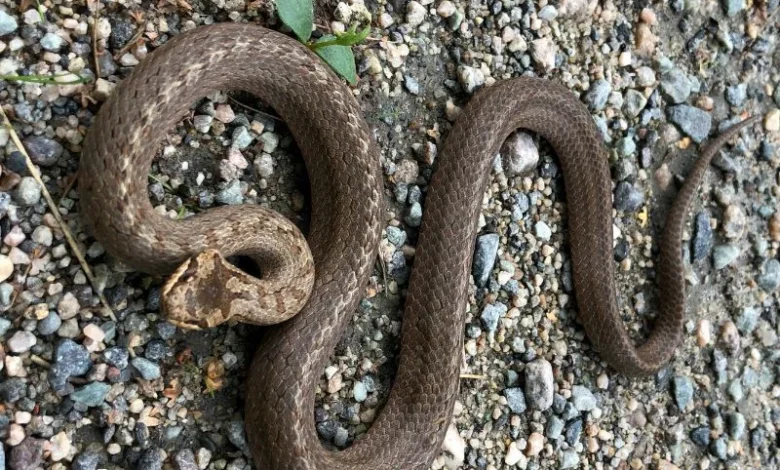
New Snake Species in Ethiopian, In the thick forests of southern Ethiopia, something unusual had been hiding in plain sight for years. A team of researchers has now confirmed it as a completely new species, the white-throated egg-eater. It doesn’t bite, it doesn’t carry venom, and it survives purely by raiding bird nests for eggs. The find is a good reminder that even in 2026, we’re still discovering creatures that have gone unnamed and unnoticed.
Spotted in the Harenna Forest
Back in 2019, a researcher named Arthur Tiutenko, from Germany’s University of Erlangen-Nuremberg, came across a young snake while working in the Harenna Forest, part of Ethiopia’s Bale Mountains. At the time, he figured it was just another African egg-eating snake, a species already well documented. But something about its scales and the colour pattern felt off. That small detail turned out to matter a lot.
What Sets It Apart
The snake’s body is a deep, almost ink black, with a subtle blue tint showing between the scales. Its throat and belly, though, are strikingly white, which is where the name comes from. It has no fangs, no venom glands, nothing dangerous about it at all. What it does have is a clever trick: bony ridges inside its throat that crack open bird eggs so it can swallow them whole, shell and all broken down internally.
Proving It Was Actually New
Spotting an odd-looking snake is one thing. Proving it’s a new species is another challenge entirely. Tiutenko’s team ran breeding experiments, pairing their unidentified female with a known African egg-eating snake male. The offspring showed a mix of features from both, which pointed toward real genetic differences. Follow-up genetic testing eventually confirmed what the team suspected all along.
Why They Waited Years to Publish
Here’s where the story gets interesting. Scientific rules usually require a dead, preserved specimen before a species can be formally named. Tiutenko didn’t want to kill a healthy animal just to tick that box. So he waited. It took years before a snake that had died naturally, after being killed by villagers in the area, could serve as that reference specimen. Only then could the paper move forward.
The Bigger Problem Behind the Discovery
What struck researchers most wasn’t the snake’s biology, it was how people reacted to it. Even though no dangerous snakes live in that part of Ethiopia, locals still kill almost any snake on sight. Fear, not actual risk, drives most of these killings. It’s a pattern that shows up in reptile populations across the globe, not just in Ethiopia.
A Few Things Worth Remembering
- This snake likely exists only on Ethiopia’s southern plateau.
- It turns up in forests, farmland, and even village edges.
- It helps keep wild bird egg populations in balance.
- Human persecution, not habitat loss, is its main threat right now.
What It Means Beyond Ethiopia
This isn’t just a story about one snake in one country. It’s about how little we actually know regarding the natural world around us, and how quickly fear can wipe out something before science even gets the chance to study it. Every new species added to the record is a small win for biodiversity, but it also shows how fragile these discoveries can be when local communities and conservation efforts aren’t on the same page. Stories like this keep adding to what we understand about species discovery worldwide.
Conclusion – New Snake Species in Ethiopian
The white-throated egg-eater almost went unnoticed, not because it was hiding well, but because nobody had looked closely enough before. Its story is really about patience, both the scientific kind that took years to confirm a new species, and the kind we all need a little more of when we come across wildlife we don’t understand. Before reacting to a snake, or any animal, it’s worth pausing long enough to actually learn what it is.
Stay informed on nature’s biggest global events.
How Active Is Russia’s Volcano?
Find out what triggered this rare volcanic eruption after the powerful earthquake.
Could Japan Face Another Disaster?
Dive into Japan’s ongoing efforts to tackle earthquakes and volcanic threats.
Is Vanuatu Safe To Visit?
Check out the latest travel guidance after the recent major earthquake.
Why Is The Ozone Recovering?
Uncover what the smaller Antarctic ozone hole means for the environment.
How Vital Is Ayeyarwady River?
Look into why protecting Myanmar’s lifeline is crucial for communities and nature.