Scientists Discover 16 Previously Unknown Fungal Species Living Inside Thai Flowers

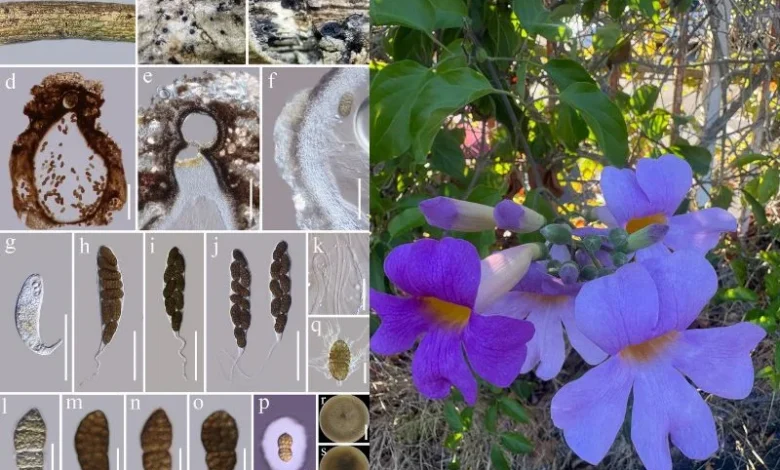
Next time you stop to smell a flower, remember there might be something living inside it that no one has ever named before. New fungal species, That’s exactly what happened in Thailand, where a team studying garden and wild flowers stumbled upon 16 fungal species of flowers in Thailand that science had never recorded. They were tucked away inside petals and stems the whole time, unnoticed until researchers went looking. It’s a small discovery in size, but a big one for what it tells us about biodiversity we still haven’t mapped.
What the Study Found
Researchers from Chiang Mai University and Kasetsart University went through 31 kinds of flowering plants, bougainvillea, vinca and butter daisy among them. Hidden inside, they found 16 species that had never been described before, all belonging to the Aureobasidium genus. This is a yeast group that turns up almost everywhere you look, in soil, on skin, in water, even on wood. On top of the new species, the team also spotted four more fungal types that simply hadn’t been recorded in Thailand before, even though they existed elsewhere.
How the Fungi Got Their Names
Naming a fungus is, in a way, storytelling. Some of these were named after the flowers that housed them, like A. bougainvilleae and A. catharanthi, the latter linked to periwinkle plants. Others point to where they were collected, A. chiangmaiense after Chiang Mai province, and A. kwanphayaoense after Phayao Lake. Two names pay tribute to people instead of places: A. saisamorniae honours Saisamorn Lumyong, and A. savitreeae honours Savitree Limtong, both Thai mycologists who’ve spent years building the country’s fungal research.
Why This Discovery Matters Globally
It’s easy to assume fungi discoveries only matter to specialists, but this one has wider reach. Aureobasidium species are already used in industry, think enzyme production, plant disease management, and even breaking down plastic waste. There’s a flip side too. A handful of species in this group can cause infections in people with weakened immune systems. That’s part of why mapping which species naturally occur where actually matters, it gives researchers a baseline to notice when something shifts.
A Window Into Hidden Biodiversity
What this study really drives home is that biodiversity isn’t only about tigers, coral reefs or rainforest canopies. A lot of it is invisible, living in places we’d never think to check. Northern Thailand’s flowers, it turns out, are packed with far more Aureobasidium diversity than anyone expected. Which raises an obvious question: if one region of flowers held this many surprises, how many more unnamed species are sitting quietly in flowers elsewhere in the world, waiting for someone to look closely enough?
Conclusion – new fungal species
At the end of the day, this isn’t really a story about fungi alone. Thailand’s discovery of 16 new fungal species is a reminder that curiosity still pays off, and that new discoveries are often closer than we think. Keep that in mind the next time you pass by a flowerbed.
Wildlife stories worth watching closely.
Which Countries Face Wildlife Loss?
Check out global hotspots where endangered species need urgent protection.
What Makes This Monkey So Rare?
Find out about the newly discovered orange-lipped monkey in Congo.
Why Are Andaman Species Disappearing?
Uncover why these unique species need immediate conservation efforts.
Can AI Help Save Wildlife?
See how AI is transforming endangered wildlife monitoring.
Which Species Are Near Extinction?
Look into wildlife facing the highest risks of disappearing.