
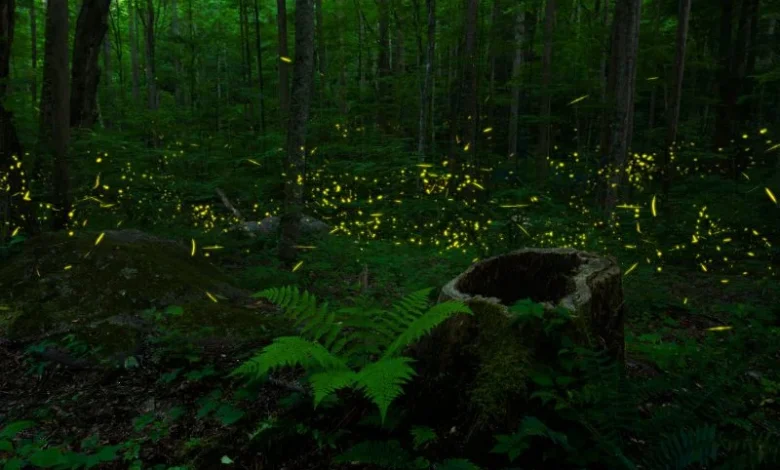
Older residents of Bali still talk about the fireflies that used to fill the rice fields at night, so many that fields seemed to glow. Restore Bali Fireflies, That sight has mostly gone now. Bright resort lights, farm chemicals, and vanishing wetlands have pushed the insects out of one village after another. This is the story of a farmer trying to reverse that, and of a firefly conservation project that says something bigger about how small creatures and small farms are connected.
Why the Fireflies Left
Fireflies don’t tolerate much disturbance. They need dark nights, clean water, and healthy soil to complete their life cycle. As Bali has grown, three things have worked against them:
- Light pollution – Outdoor lighting drowns out the flashes fireflies use to find mates, so many simply stop signalling.
- Habitat loss – Paddies and stream edges where fireflies breed are being paved over or built on.
- Chemical farming – Pesticides and synthetic fertiliser kill off larvae and the snails they rely on for food.
None of this is unique to Bali. The same pattern shows up across Southeast Asia, which is part of why local efforts matter so much right now.
A Fix That Starts With the Soil
One farmer began raising fireflies by hand, moving them from egg to larva to adult before releasing them back into the wild. It worked, up to a point. Released fireflies kept dying because the land around them was still soaked in chemicals. So the project shifted focus toward the soil itself, using compost made from cow manure and a homemade eco-enzyme spray brewed from discarded fruit instead of synthetic pesticides. Farmers who agree to go organic get these inputs for free, along with financial help to cover any losses while their land recovers.
A Model Other Places Could Borrow
The approach isn’t complicated, and that’s the point:
- Run small breeding trials before scaling anything up
- Work directly with neighbouring farmers instead of alone
- Cover the financial risk of switching away from chemicals
- Cut back outdoor lighting near wetlands and rice fields
- Use eco-tourism or organic produce sales to fund the work
Local governments or tourism boards in other insect-rich regions could take pieces of this and adapt them, pairing wildlife recovery with everyday farming rather than treating the two as separate problems.
Why a Small Insect Matters This Much
Fireflies do more than look pretty. They pollinate plants and their larvae eat snails that damage crops, acting as free pest control. When they vanish from an area, it’s often one of the first signs that the wider ecosystem is under stress, sometimes years before the damage becomes obvious.
Conclusion – Restore Bali Fireflies
Bringing back Bali’s fireflies isn’t really about the fireflies alone. It’s about resetting the relationship between farming, light, and land in a way that lets both people and wildlife recover. Change like this usually starts small, with one person deciding to protect one patch of ground.
Read more Climate Changes:
Which Hyderabad areas face worst heat?
Check the neighborhoods most vulnerable during extreme heatwaves in the city.
Which Indian cities face extreme heat?
Discover the regions across India at highest risk from rising temperatures.
Is major weather shift coming April?
Explore how upcoming weather changes could impact temperatures across India.
Which cities face climate risk 2026?
Check the urban areas under immediate environmental threat this year.
Why Chennai preparing early for heat?
Discover how Chennai is tackling rising temperatures and health risks early.