South Korea’s Hottest Day Hits 41.4°C: Why Is the Heatwave Intensifying?
South Korea Heatwave reaches a record 41.4°C, bringing dangerous heat, health risks and climate concerns as extreme temperatures intensify nationwide.

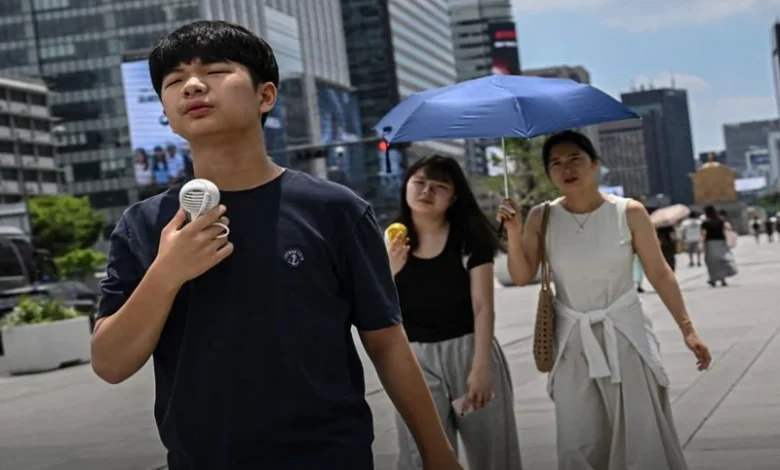
The southeastern city of Yangsan recorded 41.4°C on Friday, South Korea recorded its highest temperature since modern weather records began keeping modern weather records. The reading surpassed the previous national record of 41.0°C set in Hongcheon in 2018. It’s not just a headline number for millions of South Koreans. This means longer power cuts, worse working conditions and real health risks for the elderly, children and outdoor workers. So what is actually driving the mercury so high and why does the heat keep coming back stronger every year?
Third Straight Day Over 40°
Yangsan has now recorded three consecutive days of temperatures above 40 degrees Celsius, with the Korea Meteorological Administration issuing its highest-level heat warning for parts of South Gyeongsang Province. The whole country is under heat advisories now. This kind of extended, record-breaking heat is what climate scientists would describe as an indication that typical summer weather is being pushed beyond its limits.
Why This Heat Wave Is Getting Worse
This year a number of forces are at work. Warm ocean surface temperatures around East Asia are unusually high, storing extra heat that is later released into the air. Meteorologists have also noted a phenomenon called atmospheric blocking, in which a large ridge of high pressure lingers for days rather than moving through quickly. It’s like a lid on a pot, trapping warm air over the Korean Peninsula.Researchers also link these blocking patterns to a weaker, wavier jet stream, in part driven by rapid Arctic warming.
When the jet stream weakens as it normally does, weather systems stop moving as they usually do and so heat, and sometimes drought, stick around much longer than they used to. Add to all this the effects of global warming from greenhouse gas emissions and heatwaves getting hotter, longer and harder to predict.
What Workers and Families Can Do to Stay Safe
Until the underlying weather patterns ease, households across South Korea and neighboring countries have practical steps they can take to reduce risk:
•Stay indoors or avoid strenuous outdoor activities from noon to 4 PM.
•Before going outside, check the daily heat alerts from the Korea Meteorological Administration.
•Stay Hydrated and Take Frequent Breaks in Shade or Air Conditioned Spaces
•Watch for signs of heat exhaustion in elderly relatives, young children and pregnant women.
•Go to cooling centers set up by many local governments during extreme heat warnings.
•Check on neighbors living alone, especially in older housing with no air conditioning.
Conclusion
South Korea’s new heat record is a clear signal that summers are moving into more dangerous territory, not just for one country, but across the whole region. Scientists are still working out how much of this is due to natural cycles, as opposed to long term climate change, but the practical advice for now remains the same: plan around the hottest hours, keep a close eye on official heat warnings and look out for the most vulnerable people around you. But today, a record like 41.4C is a warning that should be taken seriously, not after the next one is broken.
Explore more future-ready stories.
How Will Korea Cut Carbon?
Check out the coal phase-out strategy.
Which Countries Beat Urban Heat?
Find the leading cooling initiatives.
Which Cities Are Climate Ready?
Browse the smartest infrastructure projects.
Where Can Vegans Eat Best?
Discover top plant-based food destinations.
Which Cities Redefine Public Spaces?
See the world’s most innovative urban designs.