A super El Niño killed tens of millions in 1877. Could another powerful one be forming, and why is India at risk?
Scientists warn a super El Niño may form by 2026, threatening India with weak monsoons, drought, heatwaves, and food security risks.

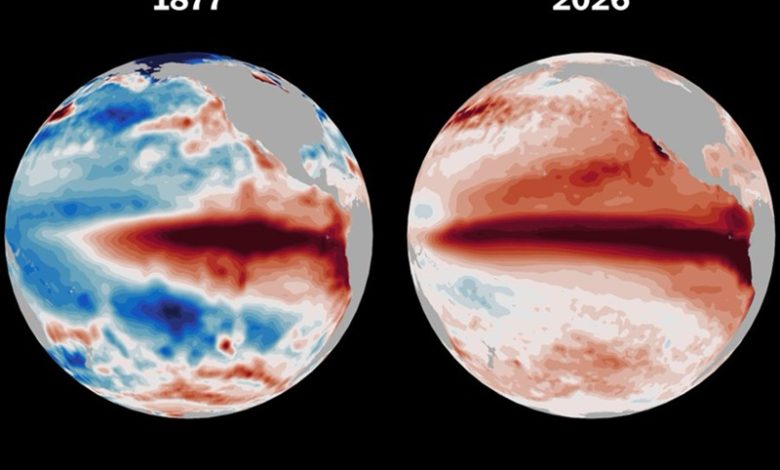
Many scientists are beginning to voice concerns about the impending birth of the next “super El Nino”. With the possibility of developing a super El Nino before the end of 2026, they are fearful of facing extreme weather conditions, the distribution of global agricultural products, and a weaker monsoon season in countries that heavily rely on the seasonal rains, like India.
The growing concern stems from the rapid rise of sea surface temperature (SST) in the Pacific Ocean. SSTs have risen dramatically over the last month to levels that many climate models predict will be very close if not equal to the record SSTs associated with some of the strongest El Nino events on record.
Why the 1877 El Niño Is Still Remembered
About one of the most notoriously well-known El Nino events, known as the El Nino of 1877, is that many historians and climate scientists continue to associate this event with some of the most extreme climate-related mortality events ever recorded. This El Nino caused widespread droughts, devastating crop failures, and mass starvation, and many parts of Asia, Africa, and Latin America suffered extreme heat from this event.
Approximately tens of millions of individuals worldwide died from starvation because they didn’t have access to food during this event due to drought.
What Exactly Is El Niño?
El Nino is a broad-based climate phenomenon that results from ocean temperatures rising significantly above normal patterns in the eastern and central Pacific Ocean for an extended period of time. Warming of the ocean surfaces causes global atmospheric circulation systems to be disrupted, and, as a consequence, the amount of rainfall, storm activity, heat waves, and droughts around the world will be impacted as well.
Why India Faces Serious Risk
A weaker monsoon season can have the following effects:
• The production of rice, wheat, cotton, sugar, and soybeans
• Reservoir and groundwater levels
• The availability of potable water
You Might Also Like
Which Hyderabad areas face worst heat?
Check the neighborhoods most vulnerable during extreme heatwaves in the city.
Which Indian cities face extreme heat?
Discover the regions across India at highest risk from rising temperatures.
Is major weather shift coming April?
Explore how upcoming weather changes could impact temperatures across India.
Which cities face climate risk 2026?
Check the urban areas under immediate environmental threat this year.
Why Chennai preparing early for heat?
Discover how Chennai is tackling rising temperatures and health risks early.
Final Words
The level of technology used today is far greater than it was back in 1877; however, despite this fact, India continues to be at high risk from monsoon events, agricultural stress and extreme heat. For the next several months, scientists around the world will be monitoring the Pacific Ocean closely as developments there may greatly affect weather, food security and economic stability for many regions of the planet.
FAQs
1. What do you mean by a super El Niño?
A super El Niño is considered an extremely intense El Niño characterized by an extraordinary rise in tropical ocean temperatures in the equatorial Pacific Ocean.
2. How does India’s susceptibility to El Niño relate to that country’s ability to provide food for its people?
El Niños reduce monsoon rains in India, and thus the ability to support food production, water supplies and agriculture in general.
3. Did the 1877 El Niño really did create mass starvation throughout the world?
Yes, a number of factors, in addition to the El Niño, contributed to widespread famine and drought resulting in millions of deaths globally.
4. Has a super El Niño been confirmed for 2026?
No, weather scientists continue to assess and observe changes in the condition of the Pacific0 Ocean, but overall evidence indicates there is an increasing chance of a super El Niño occurring in 2026.