
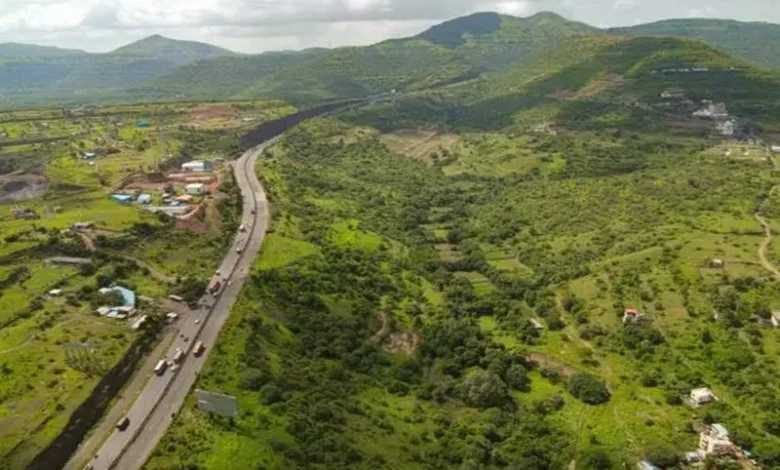
There was once a lot of trees, hills, and open spaces in Pune. While it has been around since the beginning of urbanisation, and much vegetation/agricultural land existed (with the majority of the land in the early urbanisation phase of Pune’s development), vegetation still accounted for more than 38% of Pune’s overall land area in the early 1990’s. This includes all of the large areas of grassland, hills, and river ecosystems that provided homes for many species of plants and animals.
At the same time as Pune had so much green space back in the 1990’s, the start of the early urbanisation and large amounts of construction and infrastructure development were changing the face of the city and rapidly reducing green spaces. Between the 1970s and early 2000s, urban areas continued to grow steadily in size. As a result of the growth of built-up areas and increased levels of infrastructure, the amount of available green space decreased dramatically over this time period.
After: Pune’s Green Cover (2015–2026)
The last decade has brought about the most significant amount of change to Pune and the city’s green spaces ever. Due to the rapid increase in new IT hubs, housing developments and roads, the green space in Pune has significantly decreased.
The total amount of vegetation in Pune has decreased from ~31% in 2020, down another ~620 hectares of tree cover and ~500 hectares of grassland between 2016 and 2019.
In addition, due to the sheer size of the amount of urban development that has occurred in Pune, the total amount of urban area is now over 35% of the total land in Pune, highlighting the amount of urban growth in Pune.
Current Findings Indicate Additional Impacts
- Urban sprawl has reduced the amount of carbon that can be absorbed in Pune by ~34%.
- Where there is currently native vegetation on the hills in Pune, that vegetation will continue to be replaced or degraded because of development and/or changes to the vegetation community.
- Thus, the transition continues, with Pune moving from a green-dominated area to an urbanised area.
What This Means for Pune Today
The loss of greenery is not merely an environmental issue; it also affects everyday life.
- More frequent hot weather caused by the urban heat island effect
- Increased risk of flooding due to failing natural drainage systems
- Declining air quality and lower rate of carbon absorption
- Reduced biodiversity and ecological stability of urban areas
Even small losses of trees and shrubs can dramatically alter the local climate, making it hotter and less resilient.
Smarter Living Tips for Climate, Comfort & Sustainability!
Which LA Areas Are Climate Safe?
Discover the safest and riskiest zones in Los Angeles for climate impact.
How Much To Cool Sydney Home?
Explore the full cost breakdown of cooling a home in Sydney today.
Why Does Indoor Air Quality Matter?
Check how indoor plants improve air and boost healthier living spaces.
What Are Benefits Of Regenerative Farming?
Explore proven advantages and warnings about greenwashing in agriculture.
Which Curtains Keep Delhi Homes Cooler?
Discover the best curtains and shades to reduce heat in Delhi homes.
Final Words
Pune is a good example of a city that has experienced rapid growth at the expense of the environment. While Pune continues to grow economically, economic growth comes at the cost of the city’s natural setting. The primary challenge facing Pune is to not only slow the downward trend in vegetation but also return to greener infrastructure before the damage to the environment is insurmountable.
FAQs
1. What is Pune’s current level of green cover?
Vegetation has gone from ~38% in 1990 to ~31% by 2020, which will continue to decrease.
2. What are the primary causes of decline?
Urbanisation (building growth), infrastructure growth and loss of natural ecosystems.
3. Are Pune’s hills affected?
Yes, many hill ecosystems are under extreme pressure due to urbanisation and landuse changes.
4. Is it possible to restore the level of green cover in Pune?
Yes. One way is through urban forestry projects and preservation of hill ecosystems coupled with improved planning policies.