
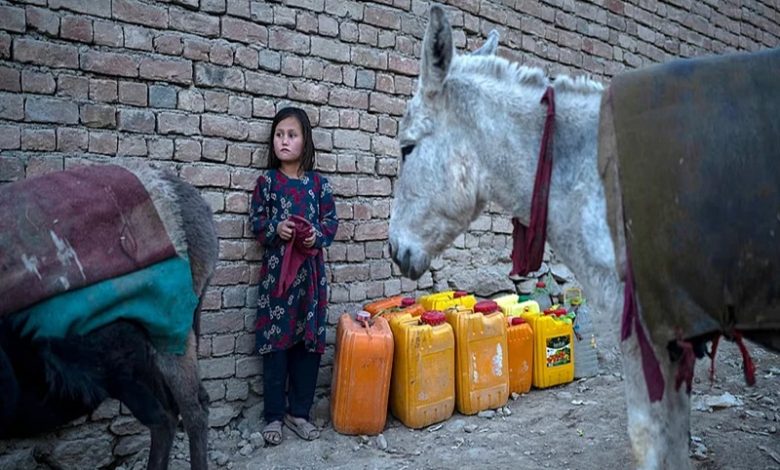
Kabul shows what water “bankruptcy” looks like when a city keeps drawing from reserves faster than nature can refill them. The phrase sounds dramatic, but in Kabul it is painfully literal: aquifers are dropping, borewells are failing, and whole neighborhoods are being pushed into a daily race for water. Mercy Corps says Kabul’s aquifer levels have fallen by 25 to 30 meters in the past decade, while groundwater extraction now exceeds natural recharge by about 44 million cubic meters each year. Nearly half of the city’s boreholes are already dry, and some projections warn Kabul’s aquifers could run dry by 2030 if current trends continue.
A City Running On Borrowed Water
What makes Kabul’s crisis feel like bankruptcy is not just scarcity, but the way every pressure point is hitting at once. Population growth has transformed the capital from a city of under 1 million people in 2001 into one with roughly 6 million residents today, sharply increasing demand for household water, sanitation, and private wells. At the same time, drought, erratic rainfall, and weaker snow and glacier melt from the Hindu Kush are reducing the natural recharge that once kept the system alive.
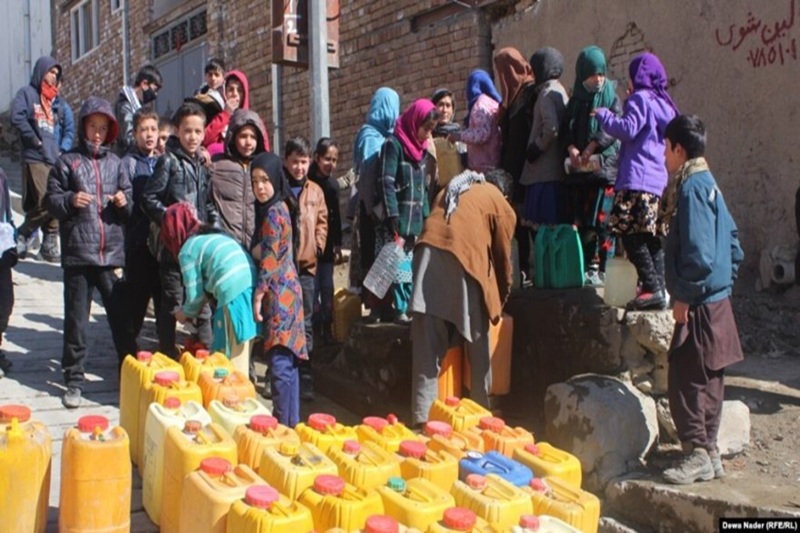
The result is a harsh urban routine. Reuters reported from Kabul that families now spend hours in line at communal taps, children miss school to haul jerrycans, and poorer households can spend up to 30% of their income on tanker water. In the wealthier parts of the city, deeper private wells can still buy time. In poorer districts, people are left with queues, debt, and rising desperation. That is what urban pressure looks like when water becomes a market good before it remains a public necessity.
When Overuse Turns Into Inequality
Kabul’s water story is also about who gets left behind first. Over 120,000 unregulated borewells, along with commercial users including factories and greenhouses, are draining the city’s three main aquifers at nearly double their natural replenishment rate. As supplies shrink, private water sellers gain leverage, and families that once relied on shallow wells are forced to buy water at inflated prices. In a city already strained by poverty and weak infrastructure, water stress quickly becomes class stress.
There is another layer to the crisis: quality. Mercy Corps says up to 80% of Kabul’s groundwater is unsafe because of sewage, salinity, arsenic, and other contaminants. So even where water still exists, it is often risky to drink. That makes Kabul a clear example of why “water bankruptcy” is bigger than drought alone. It is about overuse, pollution, governance failures, and a city expanding faster than its natural systems can cope. Reuters, citing a U.N.-linked report on global water bankruptcy, described this broader reality as living beyond hydrological means. There is no abstract warning inside that story. It is one of its clearest front-line cases.
Why Kabul Matters Beyond Afghanistan
Kabul matters because it compresses a global problem into one urban snapshot: shrinking supply, uncontrolled extraction, rising prices, and human fallout that lands first on children and the poor. If cities keep treating groundwater like an emergency savings account with no bottom, Kabul may not remain the exception for long.
FAQs
1. Why Is Kabul Facing A Water Crisis?
Overpumping, drought, rapid urban growth, weak infrastructure, and pollution have pushed Kabul’s groundwater system toward collapse.
2. What Does Water Bankruptcy Mean Here?
It means water reserves are consumed faster than nature can restore them sustainably anymore.
3. Who Is Hit Hardest In Kabul?
Poor families, children, and neighborhoods relying on shallow wells face the earliest and worst shortages.
4. Is The Water Only Scarce Or Also Unsafe?
Much groundwater is contaminated, making access both a quantity crisis and health emergency.
5. Why Does Kabul Matter Globally?
It shows how climate stress and overuse can break fast-growing cities without urgent reform.