

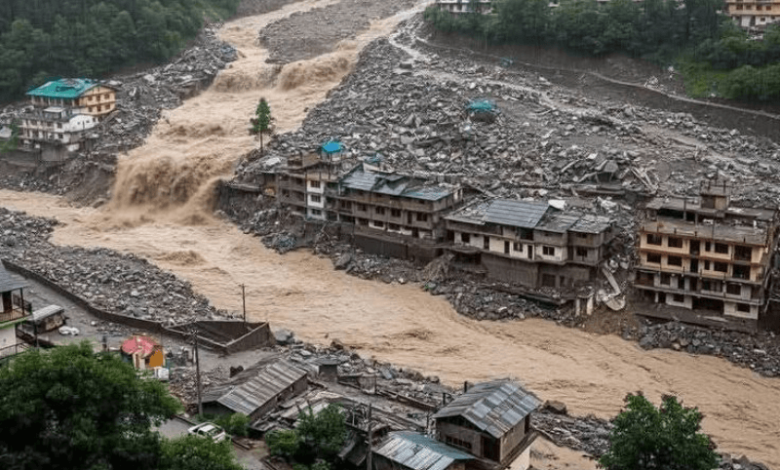
On Tuesday, a sudden fast-paced sludge hit Uttarakhand, killing at least four people and leaving around 100 others missing. This disaster hit the village of Dharali after torrential rainfall in a short period of time.
The Indian Meteorological Department (IMD) has highlighted that this could be related to a cloudburst. Rescue operations are still continuing in the affected area and the death toll could rise further. This is extremely concerning.
A cloudburst is a dangerous natural phenomenon that sees a lot of rainfall happening in a concentrated area in a really short term. This could be in an area of 30 square kilometres are less and the rainfall could be at 100 millimeters or more in one hour.
Is climate change responsible for cloudbursts and Uttarakhand flash floods?
Cloudbursts are not rare, especially in the Himalayas. Nonetheless, the latest Uttarakhand flash floods is not the first time that the Northern Indian state has faced such a situation. The 2013 Kedarnath floods also bring back horrific memories.
That 2013 disaster is one of India’s deadliest flooding tragedies. More than 6,000 people died in the situation, according to a UN report. But there is a huge possibility that climate change is making cloudbursts more frequent and serious.
The Guardian has highlighted a study in one of its recent reports. The research has found that more than half of the extreme rainfall during the Kedarnath floods can be possibly linked to greenhouse gas emissions and aerosol particles in the atmosphere. Keep an eye out for more updates.
Read Also: Retreat or Rebuild!? Floods could force thousands to migrate from New Jersey