What Tehran’s Black Rain Reveals About The Environmental Cost Of Urban Fuel Strikes
Tehran’s black rain after fuel depot strikes shows how urban energy attacks spread toxic air, health risks, and climate fallout far beyond conflict zones into daily city life.

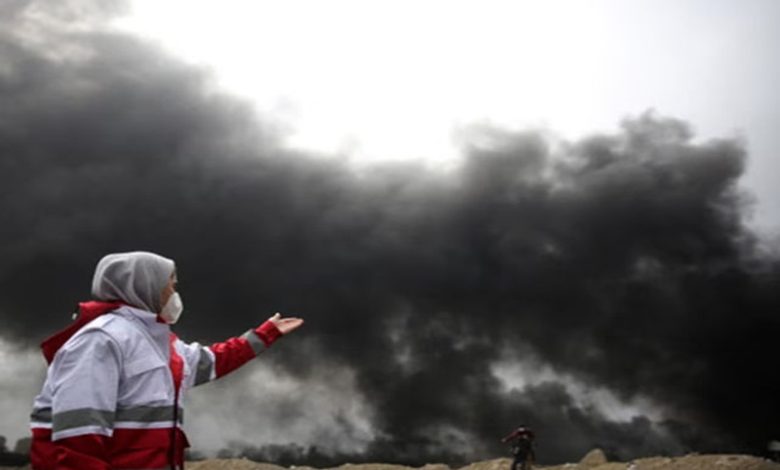
Tehran’s black rain was not just a shocking image from war. It was a warning about what happens when fuel infrastructure sits inside a crowded urban system and then gets hit. In early March, strikes on oil depots and refinery-linked sites around Tehran sent huge plumes of smoke into the air. Soon after, residents reported dark, oily rain, burning eyes, breathing trouble, and a city coated in fallout. The World Health Organization warned that the polluted rain and air posed real respiratory risks, while wider reporting showed the smoke carried oil particles, sulphur compounds, and other toxic material back down into neighbourhoods already living with chronic air stress.
When A City’s Fuel Becomes Its Fallout
The lesson is bigger than one storm. Urban fuel strikes do not stay inside refinery gates. Once storage depots, pipelines, or refining units burn, the damage spreads through air, water, roads, homes, hospitals, and food systems. Reporting on the Tehran strikes says major fuel sites, including the Shahran depot and refinery-linked infrastructure, burned for days. Satellite analysis and on-the-ground accounts showed thick smoke drifting across the capital, while later rainfall pulled that contamination back to street level. That is what made the black rain so powerful as an image. It turned an industrial strike into something intimate. People did not just see the damage. It landed on their cars, clothes, skin, balconies, and windows.
This is also why the phrase “environmental cost” matters here. The damage is not only carbon. It is exposure. Burning oil facilities can release soot, hydrocarbons, sulphur oxides, nitrogen compounds, and potentially heavier toxic residues. Scientists quoted by Reuters, AP, and Nature said those particles can move deep into the lungs and even enter the bloodstream. That turns one military action into a layered public-health event, especially for children, older residents, and people with asthma or heart disease. official post by UN News on X covering the health warning.
Why This Rain Matters Beyond One Storm
What happened in Tehran also exposed a harder truth about modern cities: fuel systems are often treated as strategic assets first and public-health risks second. Tehran already struggles with dirty air, and some reporting noted that pollution from lower-quality fuels such as mazut had made baseline conditions worse even before the strikes. When conflict hits that kind of urban energy geography, the atmosphere becomes a delivery system for harm. Smoke rises, weather shifts, and the city itself becomes the target zone long after the blast.
The wider climate cost is serious too. An analysis reported by The Guardian said the first 14 days of the war on Iran produced more than 5 million tonnes of CO2 emissions, with a large share linked to burning fuel storage and damaged civilian infrastructure. So the fallout runs in two directions at once: local toxicity now, planetary heating later. Tehran’s black rain made both visible in one frame.
The Cost Urban Fuel Systems Hide In Plain Sight
There is another reason this story travels. It fits a global pattern. Dense cities keep fuel close because they need power, transport, heat, and logistics. But when those systems are concentrated near homes, schools, and roads, a strike turns energy dependence into civilian exposure in hours. Researchers tracking conflict-related environmental damage have logged hundreds of harmful incidents in Iran during the current war, showing that the problem is not isolated to one depot or one skyline.
So black rain should not be read as a bizarre weather event. It should be read as a brutal summary of urban vulnerability. A city built around fuel can end up breathing its own supply chain. Tehran’s streets showed what that looks like: war, pollution, infrastructure risk, and environmental inequality collapsing into one visible layer of ash and oil. That is why the image will last. It says, in one dark storm, that the real cost of striking urban fuel is paid far beyond the target map.
FAQs
What Is Black Rain In Tehran?
Rain mixed with soot, oil particles, and toxic pollutants from burning fuel infrastructure.
Why Did The Rain Turn Black?
Smoke and airborne chemical particles mixed with moisture, then fell back during rainfall.
Is Black Rain Dangerous To People?
Yes, it may irritate skin, eyes, lungs, and worsen heart or breathing conditions.
Why Is This An Environmental Story Too?
Because strikes damaged air quality, added emissions, and spread pollution across urban neighbourhoods.
What Does Tehran’s Black Rain Show Globally?
Cities storing fuel near homes face wider civilian harm when energy sites are attacked.