Record Glacier Melt in Swiss Alps: What It Means for Water Security in Switzerland
Swiss Alps glacier melt is accelerating due to climate change, raising concerns about water security, hydropower, and ecosystems in Switzerland.

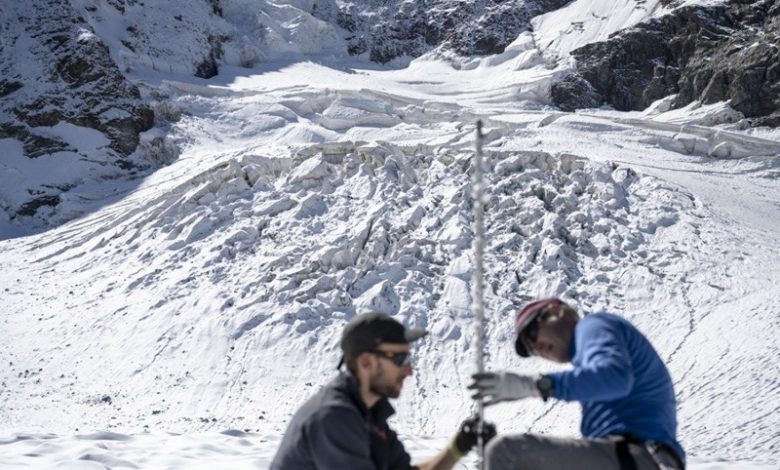
The melting of glaciers in the Swiss Alps has been one of the most noticeable effects of climate change in Europe. According to the scientists who observe the area, the glaciers of Switzerland are shrinking at the highest rates ever, with approximately 3 percent of the total glacier mass disappearing in just one year, and almost 25 percent disappearing in the last 10 years.
These glaciers are natural reservoirs of freshwater, which are the source of rivers, hydropower, and agriculture in Switzerland and neighboring nations. Since the melting ice is more rapid than it can be replaced, the long-term stability of the water supply is becoming more doubtful. This loss of glaciers has important implications for policymakers, communities, and environmental planners who rely on the alpine water resources.
Swiss Alps Glacier Melt and Its Accelerating Trends
The Swiss Alps glacier melt has increased at an alarming rate in recent years as temperatures rise and snow falls decrease. The Swiss Glacier Monitoring Network (GLAMOS) said that glaciers lost an average of 3 percent of their ice mass during the 2025 winter alone due to a lack of snow during winter, followed by extreme heatwaves.
According to scientists, there are places where some glaciers are depleting by over two meters within a single season. This loss is so fast, and it is indicative of a general warming trend in the Alps. Already in the past ten years, approximately a quarter of the glacier volume has melted away in Switzerland, and over 1000 smaller glaciers have simply gone away.
If this trend continues, many Alpine glaciers could vanish by the end of the century, dramatically reshaping the region’s landscape and climate balance.
Glacier Loss Impact on Water Security in Switzerland
The glacier loss impact goes far beyond environmental changes—it directly affects Switzerland’s water security. Alpine glaciers also serve as the natural water towers and gradually supply the rivers with meltwater during the warm months when the rainfall is low.
With the shrinkage of glaciers, rivers will first have high flows as the melting is enhanced. Nevertheless, when glaciers are too small, the water supply during summer may decrease significantly. This would impact the hydroelectric power production, irrigation water, and availability of drinking water.
When there are fewer reserves of glaciers, natural hazards like landslides, glacier lake outbursts, and unstable mountain slopes are also likely to be enhanced. Such societies that rely on alpine ecosystems can be subjected to greater economic and environmental strains over the next few decades.
Climate Change and Swiss Glaciers: Future Outlook
The link between climate change and Swiss glaciers is now well established. The processes of increasing temperatures, increasing summers, and decreasing snowfalls are accelerating the continuous retreat of glaciers in the Alps. Scientists caution that the process of melting glaciers will only get faster without major cuts in the emissions of greenhouse gases going on in the world.
According to the future predictions, most of the small and medium-sized glaciers in Switzerland might be lost before 2100. This would not only impact national water resources, but the European river systems whose source is in the Alps would also be affected.
In response to these risks, Switzerland is also investing in glacier monitoring programs, climate adaptation programs, and sustainable water management systems to prepare to live with fewer glaciers in the future.
Official Social Media Reference
FAQs
1. Why are glaciers in the Swiss Alps melting so quickly?
Glaciers are melting faster due to rising global temperatures and reduced winter snowfall. Heatwaves and longer summers accelerate ice loss and prevent glaciers from rebuilding.
2. How much glacier ice has Switzerland lost recently?
Studies show Switzerland has lost about 25% of its glacier volume in the last decade, with around 3% disappearing in a single recent year.
3. How does glacier melt affect water supply?
Glaciers act as natural water reservoirs. When they shrink, long-term water flow in rivers may decline, affecting drinking water, farming, and hydropower.
4. Are Swiss glaciers expected to disappear completely?
Many smaller glaciers could vanish by the end of the century if global warming continues. Larger glaciers may survive longer but will shrink significantly.
5. What is Switzerland doing to address glacier loss?
Switzerland runs extensive glacier monitoring programs, invests in climate research, and is working on long-term water and climate adaptation strategies.