
Solar Trees: The Future of Green Energy
Discover how solar trees provide efficient renewable power in urban spaces. Explore the latest in sustainable energy technology for a greener future.

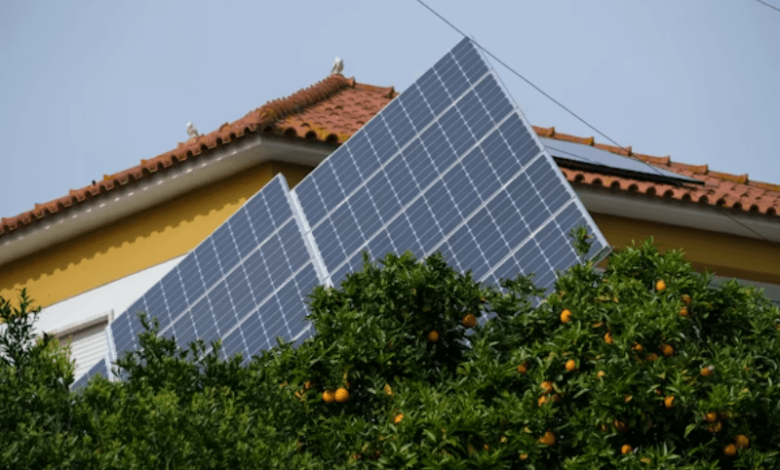
With the world shifting towards a carbon-neutral world, new types of structures are being created that are called solar trees, which is a revolutionary development in urban design. These biomimetic modules replicate the look of natural plants and accommodate the high efficiency photovoltaic devices on its branches. They use vertical space, which results in a greater energy density compared to conventional ground-mounted arrays, which would be suitable in a densely populated and crowded metropolitan space. By 2026, these installations will be widespread in the parks and smart cities and will be an integration of architectural beauty and functionality. They do not only produce clean power but also provide shades and electric vehicle charging points, which is a sign of a perfect union between technology.
Impact of Renewable Integration in Urban Planning
The rise of Renewable Integration is evident as modern cities incorporate these metallic arbors into their core infrastructure. These devices do not take up lots of land space as is the case with bulky roof top panels, hence they are ideal when walking on narrow paths or community squares. High-tech tracking systems will enable the specialized leaves to trace the movement of the sun throughout the day and hence generate electricity to a large extent. The advancement means that clean power is available even in the concrete jungles with the highest densities without interfering with the aesthetic value.
Advancements in Sustainable Technology for 2026
Modern Sustainable Technology has enabled these structures to capture kinetic and thermal energy alongside traditional sunlight. This multi-modality solution is effective in solving the intermittency of natural sources of power. Under smart grid connectivity, excess energy is automatically stored in built-in battery, as a means of reliable backup supply during peak hours. This will make these installations the backbone of decentralized energy networks worldwide, serving street lamps, local WiFi hubs, and all over the world, in response to the reduction in production costs as well as efficiency.