
Smartest Eco Cities in Asia You Should Know (2025 Edition)
The future of eco-cities in Discover Asia Smart Cities 2025: Singapore, Seoul (and more) will bring innovation, sustainability, and green urbanism together to create a smarter future.

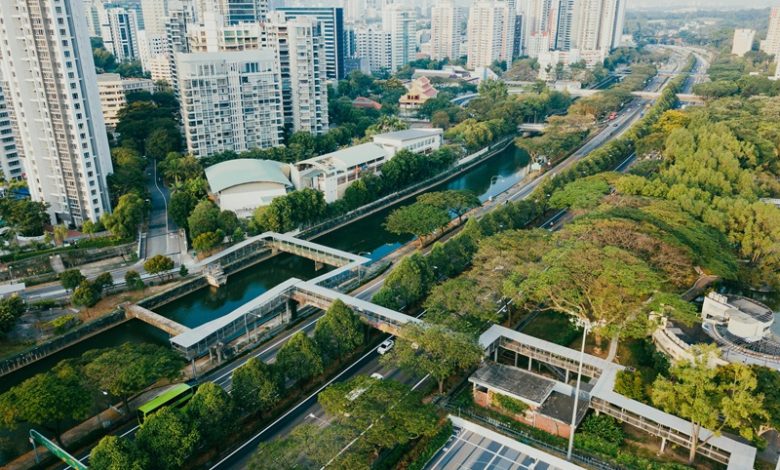
With Asia continuing to lead in technological innovation and sustainability, there are a number of eco-smart cities leading the pack in innovation. Singapore, with its green urban scenery, Tokyo, with its big ambitions of climate control, and Seoul, with its city built on VR technology, are some of the examples of how contemporary technology can integrate with nature. All these eco-cities in Asia demonstrate intelligent government, the use of renewable energy, a decreased amount of waste, and citizen-friendly sustainability that will become the standard of all cities of the future.
Smartest Eco-Cities in Asia 2025
1. Singapore
Singapore is often described as a world leader in sustainability and is the ideal blend of technology and nature. The City in a Garden vision incorporates greenery with tall gardens, large parks, and the breathtaking Supertree Grove. The Smart Nation Initiative improves the management of cities with the help of AI and IoT, and NEWater is an example of wastewater recycling that is on a global level. Singapore has clean and efficient public transportation systems that are a global example as far as eco-innovation is concerned.
2. Tokyo, Japan
Tokyo is a blend of high-tech urban lifestyle and strong environmentalism. The city has the target of reducing greenhouse gas emissions and energy use by half by 2030. It is making investments in renewable sources of energy, such as offshore wind and ocean turbines. The waste management system is also highly developed in Tokyo and has one of the most efficient systems of public transportation in the world, minimizing pollution and congestion.
3. Seoul, South Korea
Sustainability in Seoul is being redesigned in terms of smart mobility and green spaces. The emphasis of the city on energy-saving buildings and artificial intelligence-based transportation reduces the emission levels and enhances the quality of life. A futuristic eco-metropolis is a move that is taken by its novel project of building a virtual governance to engage citizens and improve planning of the city under the initiative named Metaverse Seoul.
4. Taipei, Taiwan
Taipei is characterized by its smart city model and air quality monitoring, which is controlled by IoT and citizens. The government promotes openness and transparency to enable the residents to come up with sustainable solutions. Taipei has remained very people-planet-friendly with constant campaigns to make the city greener and more energy efficient.
5. Shanghai, China
Shanghai has adopted smart technology to enhance good governance and sustainability. The Citizen Cloud platform combines more than 1,200 services, which provide residents with easy access to government services. The city also spends on energy-efficient structures and sustainable urban designs, which makes it one of the most progressive eco-cities within China.
6. Tianjin, China
Sino-Singapore Tianjin Eco-City is among the most ambitious planned eco-cities in Asia. It focuses on green building standards, recycling, and renewable energy. In spite of other problems such as low rate population growth, it stands as the first of its type in integrating eco-urbanism between China and Singapore.
7. Dhulikhel, Nepal
Dhulikhel is a relatively new example of an eco-city as a recognized (by the World Health Organization) Nepal’s first Healthy City. It is in accordance with the WHO standards of sustainable development, environmental gain, and healthcare development. This is a small progressive city that shows that sustainability is possible even in developing areas.
All these cities are steps towards a green Asia. Singapore has an AI-driven sustainability model, and Dhulikhel has community-led initiatives, which entail smart technology and environmental stewardship. Collectively, they show how Asia is transforming the nature of the city to be smart, sustainable, and inclusive in its development.
FAQs
1. What would an eco-smart city entail?
The green infrastructure, renewable energy, waste management, and smart technology are combined in an eco-smart city to increase its sustainability and livability.
2. What is the most sustainable Asian city?
Singapore is always the most sustainable and technologically developed city in Asia because of its innovative environmental policy and smart government.
3. Are smaller countries emerging with eco-cities?
Yes, cities such as Dhulikhel in Nepal become the models of sustainability, and they demonstrate that eco-innovation does not necessarily happen in megacities.