
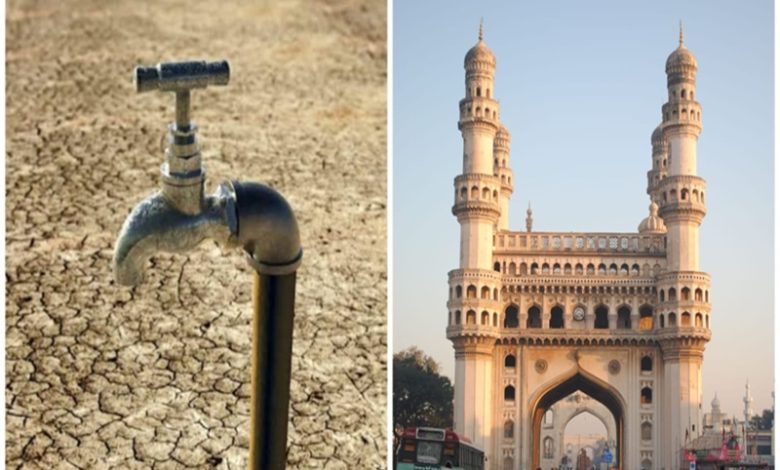
Hyderabad is heading into summer with a familiar problem that looks a little sharper in 2026: demand is rising faster than the city’s water system can comfortably stretch. Officials have already moved into summer-prep mode with tanker planning, recharge-pit targets, and tighter monitoring, but the bigger story is structural. The city has expanded, new apartments keep filling up on the edges, and water supply has not grown at the same pace. That is why Hyderabad’s summer water balance now feels less like a one-season scare and more like a planning gap exposed by heat.
The Summer Gap Is Showing Up Earlier Than Usual
The pressure is visible before peak summer has fully settled in. By February 16, Hyderabad had already logged around 50,000 water-tanker bookings, averaging about 3,000 a day, up from roughly 2,200 a day in January. Officials linked that rise to falling groundwater and higher household use as temperatures began climbing. Even with better conditions than last year, that early spike is a warning sign: when tanker demand jumps this soon, the network is already operating under stress. For live civic advisories and supply updates, the official HMWSSB on X.
Fast Urban Growth Keeps Outrunning Fixed Supply
The harder truth is that Hyderabad’s water challenge is not just about one dry spell. The city’s supply has stayed around 600 MGD for years, while current demand is estimated near 700 MGD and could reach 835 MGD by 2027. At the same time, domestic connections rose from about 8 lakh in 2016 to 14.2 lakh by the end of 2025. That mismatch explains why fast-growing fringe zones such as Tellapur, Kollur, and Osmannagar feel the pinch first. Construction moved ahead. Pipe capacity did not keep pace.
Why Peripheral Neighbourhoods Feel It First
Outer-growth corridors depend more heavily on borewells, tankers, and delayed network extensions. So when summer arrives, these areas do not just face lower convenience; they face higher costs and more uncertainty. Urban planners quoted in recent reports have warned that approving dense development without matching pipeline infrastructure only deepens that imbalance.
The Water Board Is Trying To Stay Ahead Of The Crunch
HMWSSB has not ignored the risk. Its 2026 summer action plan includes micro-level planning, tanker deployment, extra filling stations, and instructions to complete approved works by March 31. The board said the city already had 1,150 tankers, 90 tanker filling stations, and 150 filling points, with more capacity to be added where demand rises. Officials have also pushed for tanker delivery within 24 hours of booking. These are useful operational moves, especially when shortages appear in pockets rather than all at once.
Conservation Is Becoming Part Of Summer Governance
What makes this year different is the stronger push on conservation and recharge. HMWSSB has targeted 18,000 recharge pits in 90 days inside ORR limits, while a broader plan envisions 50,000 pits over time. The board has also tied new connections more closely to rainwater harvesting norms. Alongside that, the new PAANI app is meant to help citizens report misuse of drinking water ahead of summer.
These steps matter, but they are still support systems around a larger issue: Hyderabad needs supply augmentation, storage, and distribution planning that move as fast as its real-estate footprint.
FAQs
1. Why is Hyderabad’s water stress visible before peak summer?
Tankers rise early because groundwater drops first, while household demand increases before full summer heat arrives.
2. What is the main supply-demand mismatch in Hyderabad?
Supply stays near 600 MGD, while current demand is already around 700 MGD and rising.
3. Which areas are more vulnerable during summer shortages?
Peripheral growth zones like Tellapur, Kollur, and Osmannagar face weaker pipelines and heavier tanker dependence.
4. What is HMWSSB doing for summer 2026?
It expanded tanker planning, added filling points, pushed micro-plans, and set deadlines for works.
5. Can conservation steps alone solve Hyderabad’s water problem?
No, recharge helps, but long-term relief needs new sources, storage, and faster distribution expansion.