Bridging Continents as UAE and EU Redefine Partnership Priorities
Bridging Continents: UAE EU Partnership for a Shared Future looks at trade alignment, energy transition efforts, digital policy talks, and shared stability goals.

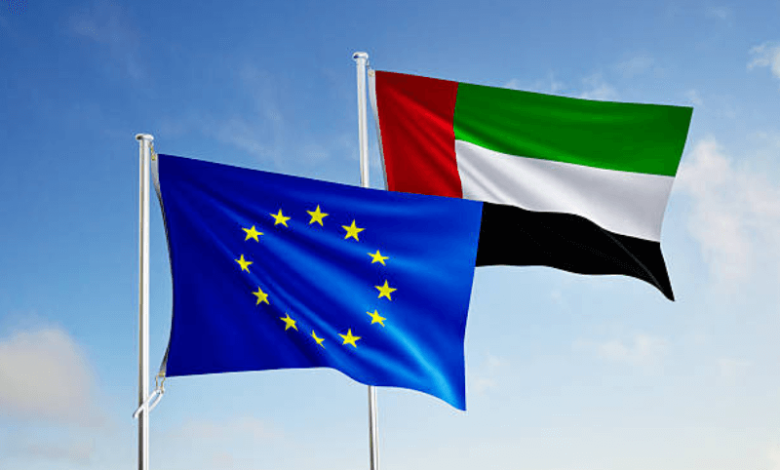
A commuter scrolls headlines on a warm evening train, phone buzzing, eyes tired. The UAE–EU strategic partnership talks land on the screen and, honestly, it feels practical. Not poetic. This “Bridging Continents: UAE EU Partnership for a Shared Future” push sits on economics, tech rules, and eco focusing on Accelerating Clean Energy Transition. Real work, real stakes, and little patience for fluff.
Why the UAE–EU Partnership Signals a New Era
Diplomacy usually moves slow, like traffic near a busy roundabout. This time, the tone looks sharper. The UAE and the European Union have signalled intent to build a longer arrangement that touches money flows, energy projects, digital rules, and security cooperation. And yes, audiences notice. European firms want predictability. Gulf investors want stable markets. Ordinary people just want fewer disruptions, fewer shocks, fewer sudden price jumps.
The Strategic Partnership Framework: What Has Been Announced
The public line is straightforward: negotiations aimed at deeper, structured cooperation. That sounds polite, but it carries weight. It suggests policy teams will sit with policy teams, not only trade delegations. It also hints at coordination across regulators, investors, and energy planners.
A small detail matters here. These talks are not pitched as a one-off signing ceremony. They are positioned as a continuing process, with multiple tracks running in parallel, which is usually where results start showing up.
Economic Leadership and Cross-Regional Trade Expansion
Trade headlines can feel dry, yet trade shapes daily life. A delayed container means empty shelves, higher prices, angry calls. The UAE’s role as a logistics and finance hub makes it a natural partner for Europe’s supply chains and industrial plans. European businesses also look for clear entry rules and quick dispute handling. Nobody enjoys ping-pong.
A quick snapshot helps:
| Area | UAE strength | EU strength | Likely direction |
| Investment | fast capital deployment | compliance depth | joint project pipelines |
| Logistics | ports, air cargo, re-export | large consumer markets | steadier trade corridors |
| Industry | project execution | advanced manufacturing | targeted industrial tie-ups |
Joint Commitment to Accelerating the Clean Energy Transition
Eco focusing on Accelerating Clean Energy Transition sounds like a slogan until someone sees a real project timeline. That is the point. Europe needs cleaner power, stable energy sourcing, and scalable options like hydrogen and grid upgrades. The UAE wants diversification, export-ready clean tech, and strong partnerships that reduce risk.
And there is a very normal, human angle. People remember the summer heat, the AC strain, the sudden spikes in bills. Cleaner systems are not only climate talk. They are also about reliability, cost control, and planning without panic.
Digital Transformation, Innovation, and Regulatory Alignment
Digital Transformation sits at the centre because trade now travels through data lanes. Payments, customs filings, supply tracking, identity checks, all digital. Europe leans hard on privacy rules and compliance. The UAE moves quickly on digital services and smart infrastructure. Put together, it can reduce friction, but only if both sides agree on guardrails.
Feels strange sometimes, how a single rule on data storage can decide where a company builds an office. Yet that is the reality. Alignment here can speed up cross-border operations, and reduce the number of “sorry, system mismatch” moments that waste weeks.
Peace, Security, and Regional Stability as Shared Priorities
Security talk often stays vague, but the day-to-day meaning is clear: safer shipping lanes, fewer sudden escalations, and smoother crisis coordination. The UAE positions itself as a steady diplomatic actor in a volatile neighbourhood. The EU wants stability near major trade routes, plus reliable partners for humanitarian and de-escalation efforts.
But people also expect delivery, not speeches. Security cooperation works best when it quietly reduces risk and keeps markets calm. No drama. Just fewer surprises.
Impact on Europe, the Middle East, and Global Partners
A UAE–EU partnership can shift behaviour beyond both regions. Businesses in Africa and South Asia watch these moves closely, because financing and standards often follow. If Europe and the UAE align on clean energy project structures or digital trade rules, partners in third markets may adopt similar templates to secure funding and market access.
And yes, there is also competition. Other corridors will respond. That is normal. Partnerships change the map.
Roadmap for UAE–EU Cooperation in the Coming Years
Expect practical steps first: working groups, sector dialogues, pilot investment channels, and measurable project pipelines. Then the harder part: regulatory convergence that does not compromise national priorities. It is messy, and it takes time.
A sensible approach is phased execution. Start with areas that reduce friction quickly, then expand. That is how policy avoids headaches and avoids loud backtracking later.
FAQs
1) What makes the UAE–EU strategic partnership different than a standard trade discussion?
It targets longer cooperation across investment, energy systems, digital rules, and stability priorities, not only tariffs or market access.
2) How does eco focusing on Accelerating Clean Energy Transition fit into this partnership?
It supports joint financing and execution of renewables, hydrogen pathways, grid upgrades, and cleaner industry planning with shared risk controls.
3) Why does Digital Transformation matter in an agreement that also talks about trade and energy?
Trade operations rely on data lanes, and aligned digital rules reduce delays, compliance confusion, and repeated checks across borders.
4) Can global partners outside Europe and the Gulf gain practical benefits?
Yes, common project templates and standards can make third-country energy and infrastructure projects easier to fund and deliver.
5) What should observers watch next as the roadmap develops?
Look for working groups, pilot projects, early investment channels, and policy coordination that shows real execution rather than announcements.