Top 10 Indian Coastal Cities Known for Trade and Tourism
Discover the top 10 Indian coastal cities that define the country’s shoreline — from Mumbai’s bustling harbor to Kochi’s calm backwaters and Puri’s sacred beaches.

Salt in the air, a light stickiness on your skin — that’s how mornings begin in Indian coastal cities. Fishermen haul their nets while the tea stall guy yells over the noise of boats.
The sea gives and takes in equal measure here. From Mumbai’s crowded bay to Dwarka’s quiet waves, these shores carry stories older than most maps.
India’s Coastal Snapshot
| Coastline | Major States | Key Sectors | Concerns | Tourism Spots |
| Arabian Sea | Gujarat, Maharashtra, Goa, Kerala, Karnataka | Ports, trade, tourism | Flooding, erosion | Goa, Kochi |
| Bay of Bengal | Tamil Nadu, Andhra Pradesh, Odisha, West Bengal | Fishing, shipyards | Cyclones | Marina Beach, Puri |
| Indian Ocean Edge | Andaman & Nicobar, Lakshadweep | Tourism, marine trade | Coral loss | Diving, island stays |
Top 10 Indian Coastal Cities To Visit
1. Mumbai, Maharashtra
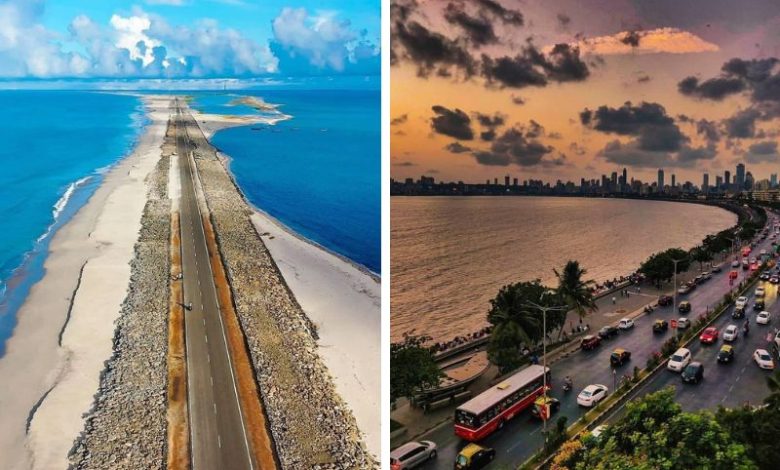
Even the air tastes metallic here. The sea crashes against Marine Drive as vendors pour cutting chai. Floods come, traffic stalls, and still, people move. That’s Mumbai — soaked, noisy, alive.
2. Kochi, Kerala
The sound of wooden boats and seagulls fills the harbor. Chinese nets rise slowly at sunset. A mix of spice, salt, and coffee in the air. You could sit for hours just watching life happen around you.
3. Chennai, Tamil Nadu
Marina Beach wakes up before sunrise. Vendors push carts, children chase waves, and the city begins its day without fuss. Cyclones hit often, but Chennai knows how to clean up and move on.
4. Visakhapatnam, Andhra Pradesh
Locals call it Vizag. Ships line the harbor, gulls hover over the docks. There’s a calm here — a kind that hides storms beneath it. Evenings feel slow, like the sea doesn’t want the day to end.
5. Mangaluru, Karnataka
Diesel, fish, and rain — that’s the smell of Mangaluru at dawn. Workers shout over the roar of trawlers. It’s gritty and honest, a working coast that doesn’t try to impress anyone.
6. Thiruvananthapuram, Kerala
Kovalam glows gold near sunset. Waves thud against rocks. Locals sell coconuts while cranes move containers quietly at the new port nearby. The old and new live side by side here.
7. Puri, Odisha
Temple bells echo near the beach. Pilgrims walk barefoot through the sand, chanting softly. The sea feels like part of the ritual — constant, unbothered, ancient.
8. Kollam, Kerala
The backwaters slide gently into the sea. Palm trees sway, rain clouds gather, and boats float past like they’ve got nowhere urgent to be. Time slows down here, and that’s the point.
9. Kozhikode, Kerala
Tea stalls along the beach never really close. You’ll smell fried banana chips before you see the vendors. Kids play cricket with plastic bats near the waterline. People still talk about Vasco da Gama as if he came yesterday.
10. Dwarka, Gujarat
Temples watch over the turquoise sea. Fishermen fix their nets in the shade. The coast feels holy — not loud, just steady, like it’s guarding something sacred.
Emerging Challenges Along India’s Coasts
Every storm redraws the map. In Mumbai, roads disappear under brown water. In Kerala, the sand retreats a little more each year. Odisha braces for cyclones that locals can name like old enemies. Still, people stay. They rebuild, patch up walls, push their boats out again. Life near the sea doesn’t pause; it just adjusts — a familiar rhythm for Indian cities most at risk from climate change.
Economic Pulse: Blue Economy and Future Investments
The Blue Economy isn’t theory here — it’s work. Ports in Kochi, Vizag, and Mumbai run day and night. Fishing, ship repair, tourism — everything links back to the water. There’s money in the waves, but risk too. Cities are slowly learning to balance both: cleaner ports, fewer plastic dumps, better flood systems. Nothing fancy. Just fixing what’s been broken for too long.
The Road Ahead: Sustainable Coastal Development
Change creeps in slowly. Kochi is replanting mangroves. Vizag rebuilds with stronger roofs. Mumbai is mapping tide zones instead of guessing them. The goal is simple — live with the sea, not against it. The coast teaches patience; now it’s teaching survival.
FAQs
1. Which Indian coastal city manages the largest port?
Mumbai, through Jawaharlal Nehru Port, handles the most cargo.
2. Which coastal city draws the most pilgrims?
Puri, with the Jagannath Temple and its beachfront rituals.
3. What threatens India’s coastal cities most?
Erosion, flooding, and poor construction near the shoreline.
4. Which city is known for green port initiatives?
Kochi promotes renewable energy and clean operations.
5. Why are coastal cities vital to India’s economy?
They power trade, fisheries, and tourism — keeping India connected to the world.