Can Delhi’s New Street-Pole Mist Systems Actually Reduce Urban Air Pollution?
Explore how Delhi's new street-pole mist systems combat urban air pollution. Discover if this micro-mist technology is a quick fix or a lasting solution.

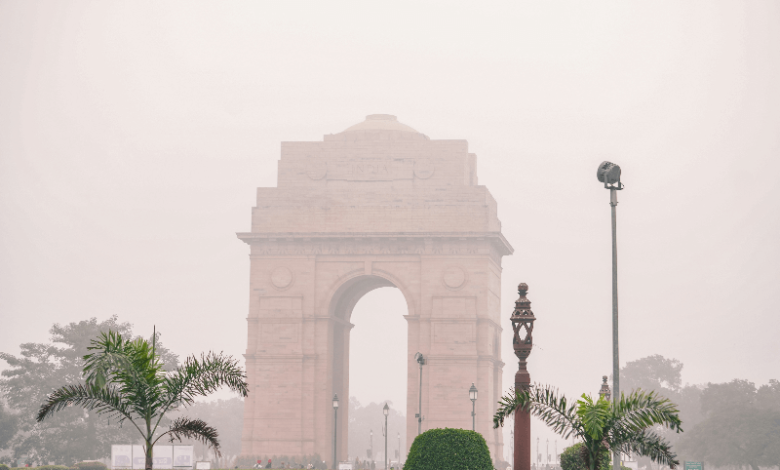
As Delhi continues its battle against hazardous air quality, the local government and civic bodies have introduced a novel localized intervention: street-pole mist systems. Located at key points of pollution, such as ITO, Dwarka, and the Indira Gandhi International Airport, the installations will be used to contain resuspended dust and provide instant resprieve to the commuters. However, are they really able to do anything about the infamous winter smog in the city?
How Delhi’s Street-Pole Mist Systems Work
These automated units are installed as high pressure nozzles that are attached to the existing electrical and street lights poles. Basing on reverse osmosis (RO) treated water, they spray continuous and fine micro-mist. In a standard arrangement, approximately 84 liters of water are used in an hour and operate on two shifts to ensure peak traffic hours are covered.
The local councils and Public Works Department (PWD) are aggressively scaling this project which will equip more than 1,000 streetlights in big roundabouts. By atomizing water droplets to bind with airborne dust, the street-pole mist systems effectively force suspended particulate matter (PM10 and PM2.5) to settle on the ground without waterlogging the roads.
The Impact on Urban Air Pollution: A Quick Fix or Long-Term Solution?
Although the image of a cooled foggy avenue is reassuring, environmental activists are warning about their efficiency in general. These misting networks are specifically localized to road dust unlike heavy vehicular emissions or stubble burning, which necessitates a systemic change in policy.
The experts of air quality say that the area of influence is limited to the immediate corridor. Nevertheless, they are a great enhancement to the stationary anti-smog guns since they do not allow re-suspension of dust along long pathways. Still, they do not eliminate the root causes of urban air pollution.
Moving Beyond Temporary Measures
To achieve sustainable growth in the capital, these misting poles have to be included in a more comprehensive, multi-layered strategy to go green. The government is already aligning such installations with the rigid application of Graded Response Action Plan (GRAP) and the electrification of the public transport. While the Delhi mist system offers a smart, infrastructure-light method to provide breathable commercial zones, the ultimate victory against toxic air relies on curbing emissions at their source.
(FAQs)
1. What are street-pole mist systems?
They are automated, high-pressure water nozzles installed on existing streetlights and electrical poles. They spray a fine mist of treated RO water to weigh down and settle airborne dust particles in highly polluted areas.
2. Do these mist systems cure urban air pollution?
No, they do not cure the root causes of urban air pollution, such as industrial or vehicular emissions. They are a localized mitigation tool designed specifically to suppress resuspended road dust and provide temporary relief in high-traffic zones.
3. Will the misting systems waste drinking water?
No. Authorities ensure that these systems utilize treated recycled water (RO water from sewage treatment plants) to prevent the wastage of fresh drinking water while preventing scaling in the nozzles.
4. How are they better than traditional anti-smog guns?
Unlike heavy, truck-mounted anti-smog guns that require fuel and cover a single spot at a time, pole-mounted mist networks run continuously over long stretches of road without requiring extra infrastructure or occupying road space.