
How East Africa’s Shorter, Harder Rainfall Bursts Are Raising Flood Danger In Nairobi
Nairobi faces rising flood danger as East Africa sees shorter, intense rainfall bursts that overwhelm drainage and disrupt daily life.

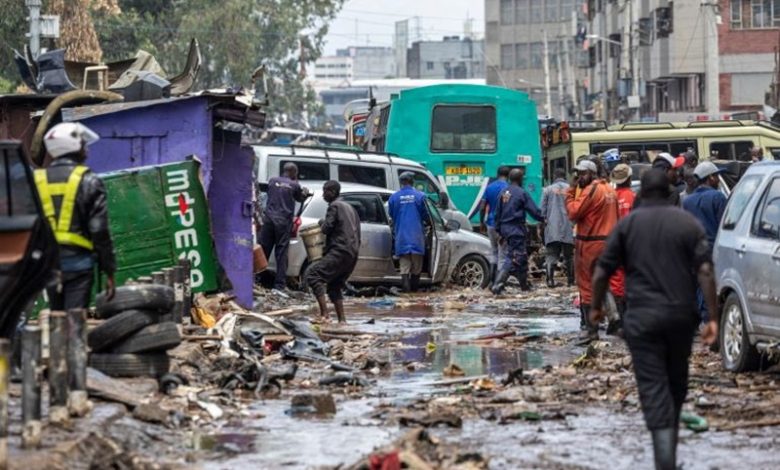
Nairobi’s latest flood shock is not just about “heavy rain.” It is about the kind of rain East Africa is seeing more often now: shorter, harder bursts that dump huge volumes of water in very little time. That shift matters because cities do not fail only when it rains a lot. They fail when drainage, roads, rivers, settlements, and emergency systems cannot absorb sudden intensity. In early March, parts of Nairobi saw about 112 mm of rain in 24 hours, more than the city’s usual average for the whole month of March, and the result was familiar but brutal: submerged roads, stranded vehicles, disrupted airport operations, damaged homes, and rising deaths.
Why The Rain Pattern Is Becoming More Dangerous
Scientists and recent reporting have increasingly framed East Africa’s flood problem around rainfall concentration rather than simple seasonal totals. The concern is that warming is helping push more rain into fewer, more intense episodes, which raises flash-flood risk even before rivers fully swell. Recent coverage on Kenya’s March floods noted that scientists link global warming to floods and droughts across East Africa by concentrating rainfall into shorter, more intense bursts. A 2024 World Weather Attribution study also found climate change made devastating rains in the region roughly twice as likely.
Why Nairobi Is So Exposed
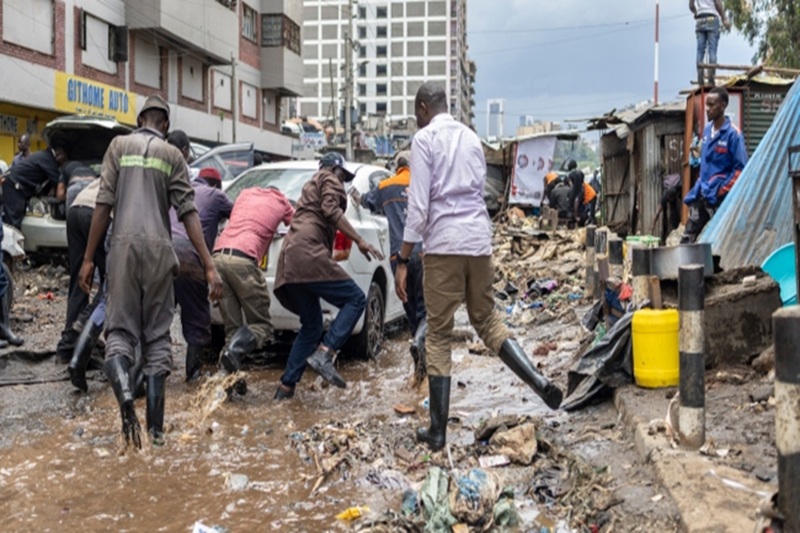
Nairobi’s problem is not the weather alone. It is an urban form. Fast runoff, paved surfaces, narrowed waterways, settlement growth in risky zones, and overstretched drainage systems all turn an intense storm into a citywide hazard. Recent flood reporting showed how quickly major corridors such as Uhuru Highway, Mombasa Road, and the Thika Superhighway became impassable after the March downpour. Reuters also reported that Nairobi has been the hardest-hit county in Kenya’s current flood episode, accounting for a large share of fatalities. When a city expands faster than its stormwater infrastructure, a one-night rainfall event can become a transport, housing, and public-safety crisis.
The Warnings Were Already There
This is what makes the story more frustrating. Kenya’s Meteorological Department had already issued heavy-rainfall advisories, warning that rainfall exceeding 20 mm in 24 hours could trigger floods, flash floods, poor visibility, and transport disruption across several parts of the country, including Nairobi. The department repeated the alert again this week for March 19 to 24, with peak intensity expected between March 20 and 23.
On its official X account, MeteoKenya also urged people to avoid walking or driving through floodwaters. That official thread matters because Nairobi’s flood danger is no longer a surprise event. It is now a forecasted urban risk.
The Human Cost Is Rising Faster Than The Debate
The current Kenya floods have already turned deadly, with Reuters reporting 62 deaths nationwide by March 14, including 33 in Nairobi, while thousands of families were displaced. That matters beyond the headline number. Short, violent rainfall bursts hit low-income neighbourhoods hardest because homes, roads, drainage channels, and rescue access are weakest there. Greenpeace Africa, responding to the March floods, pointed directly to communities such as Mukuru, Kibra, Mathare, Huruma, and Embakasi as places that were left dangerously exposed. This is why the Nairobi flood conversation is shifting from weather to resilience, inequality, and land-use planning.
What Has To Change Now
Nairobi’s flood danger will keep rising unless the city plans for intensity, not just seasonal averages. That means drainage upgrades, floodplain enforcement, better waste management to stop blocked drains, stronger warnings at neighbourhood level, and investment in settlements that routinely carry the highest risk. East Africa’s rainfall is not simply becoming “heavier.” It is becoming more concentrated and less forgiving. For Nairobi, that changes everything.
FAQs
Why are Nairobi floods worsening now?
Rain is arriving in shorter, more intense bursts, overwhelming drainage and exposing weak urban planning.
How much rain fell in Nairobi recently?
Parts of Nairobi recorded about 112 mm in 24 hours during early March floods.
Did Kenya Met warn people beforehand?
Yes, official advisories warned of heavy rain, flash floods, poor visibility, and dangerous travel.
Why are poorer neighbourhoods hit harder?
They often have weaker drainage, riskier housing, blocked waterways, and slower emergency access routes.
Is climate change part of the problem?
Yes, studies and recent reporting say warming is intensifying East Africa’s extreme rainfall patterns.