10 Worst Air Pollution Cities in China 2025 | Full Report
Discover China’s most polluted cities in 2025. See PM2.5 data, main pollution sources, and China’s clean-air plans for a healthier future.

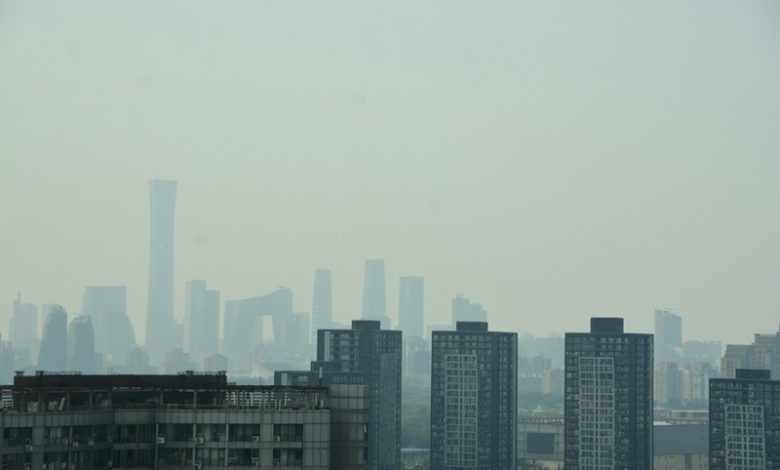
Step outside in northern China on a winter morning, and the first thing you notice isn’t the cold—it’s the air. A faint mix of smoke and dust lingers, sticking to your throat. The 2025 report on the worst air pollution cities in China shows that some regions are still blanketed by heavy smog. Xinjiang, Henan, and Hebei remain at the top. Progress is slow, and for many residents, the air still feels thick. For a regional comparison, you can also explore the Most Polluted Cities in India to see how air quality challenges differ across Asia.
Table: China’s Most Polluted Cities 2025 (Average PM2.5 µg/m³)
| Rank | City/Region | Province | 2025 PM2.5 (µg/m³) | Main Source |
| 1 | Hotan | Xinjiang | 88.9 | Dust storms, coal smoke |
| 2 | Kashgar | Xinjiang | 58.8 | Sandstorms, industrial waste |
| 3 | Anyang | Henan | 50.9 | Steel and cement production |
| 4 | Hebi | Henan | 50.5 | Coal-fired power plants |
| 5 | Xingtai | Hebei | 49.2 | Mining, furnace smoke |
| 6 | Shijiazhuang | Hebei | 47.6 | Traffic, winter heating |
| 7 | Baoding | Hebei | 45.3 | Power generation |
| 8 | Xi’an | Shaanxi | 43.9 | Dense housing, smog |
| 9 | Zhengzhou | Henan | 42.1 | Construction, transport |
| 10 | Tianjin | Tianjin | 41.7 | Refineries, port emissions |
Top 10 Worst Air Pollution Cities in China 2025
You can smell the difference between regions—Xinjiang’s dry dust, Hebei’s smoke, Henan’s coal. Each has its own version of haze, but the result is the same: low visibility and slow mornings.
1. Hotan, Xinjiang
Dust storms roll in without warning. The air feels grainy, and wind whips sand across empty roads.
2. Kashgar, Xinjiang
A storm can turn daylight bronze. Fine dust settles on every surface, even inside sealed homes.
3. Anyang, Henan
Steel plants burn through the night. The sky glows orange, and the air carries a metallic edge.
4. Hebi, Henan
Coal smoke hangs above rooftops. Residents say the smell of burning fuel never really fades.
5. Xingtai, Hebei
Factories line the city’s edges. By morning, gray particles coat shop windows and parked cars.
6. Shijiazhuang, Hebei
The air feels warmer than it should. Heating systems and traffic combine to form a thick blanket of smog.
7. Baoding, Hebei
The horizon stays blurred most days. Power plants outside town run constantly to meet energy demand.
8. Xi’an, Shaanxi
Tourists snap photos through haze. Locals say it’s been years since they’ve seen the mountains clearly.
9. Zhengzhou, Henan
Construction sites fill the skyline. Workers wrap scarves over their faces during windy afternoons.
10. Tianjin
Fuel and refinery fumes ride the coastal wind. Even the sea smells faintly industrial.
Why Pollution Levels Stay High in These Regions?
Factories still rely on coal. It’s cheap, easy, and deeply rooted in the economy. Cleaner options exist but take time and money. Geography makes it worse—mountains and plains trap the haze for days. In Xinjiang, the desert adds another layer of dust. Winter is the hardest season. Heating demands rise, chimneys puff constantly, and skies turn silver-gray by sunset. People joke that it’s not fog; it’s “winter air.”
Regional Patterns and Shifting Trends
Northern China keeps showing higher numbers. Hebei and Henan form an industrial belt that feeds the nation but chokes its own air. Xinjiang’s pollution comes from both nature and factories. On the other hand, cities like Shanghai and Shenzhen now report clearer skies thanks to renewable energy and electric buses. Still, winds don’t respect borders. Smog from one province travels to another, keeping air quality uneven across regions.
Government Measures and 2025 Clean-Air Roadmap
The clean-air plan aims to retire old power plants and expand solar grids. Thousands of electric buses now run in major cities. Wind and solar farms cover wide stretches of Xinjiang. Still, change moves slower in industrial zones where jobs depend on coal. Officials say national PM2.5 levels have dropped slightly since 2023. But residents judge improvement differently: by how far they can see down the street on a winter morning.
FAQs
1. Which city is the most polluted in China in 2025?
Hotan, Xinjiang ranks first, with average PM2.5 levels near 88.9 µg/m³.
2. Why are Xinjiang and Henan highly polluted?
Xinjiang faces dust storms, while Henan’s industries depend on coal and cement production.
3. How does this pollution affect people?
It causes coughing, fatigue, and reduced outdoor activity, especially during cold months.
4. Are larger cities showing cleaner air?
Yes. Beijing, Shanghai, and Guangzhou have seen gradual improvement under stricter policies.
5. What steps are in China’s 2025 Clean-Air Roadmap?
Renewable expansion, factory closures, emission checks, and regional monitoring.