
Why PM2.5 Hangs All Day in Kolkata’s Winter Haze
Kolkata’s winter haze is more than cold air. Calm winds and poor dispersion trap PM2.5 near ground level, worsening AQI from morning to night.


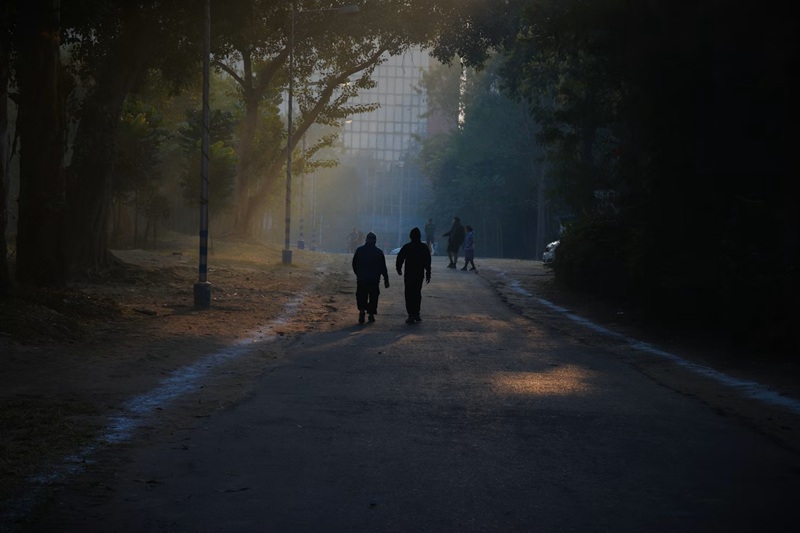
When Kolkata wakes up in winter, the haze can look almost gentle. Soft sunlight, blurred skylines, a quiet Maidan. But that “calm” is often the real trap. On many winter days, wind speeds drop so low that the city stops flushing itself out. The tiny particles we call PM2.5 stay suspended near street level, building hour by hour, instead of drifting away. By afternoon, the air can still feel heavy, even if the temperature turns pleasant. Recent local reporting has tied the sharpest spikes to weak winds and winter inversion, when a warmer layer of air sits above cooler air and blocks vertical mixing.
The Calm-Wind Trap And Why PM2.5 Lingers All Day
Kolkata’s winter pollution is not only about emissions. It is also about the day’s “dispersion mood.” When wind drops below a few metres per second, exhaust, road dust, and neighbourhood smoke do not spread out. Instead, they hover, especially along busy corridors and dense pockets. During one severe episode, reports noted winds dipping below about 2 m/s, with multiple monitoring stations sliding into “poor” and “very poor,” and PM2.5 dominating the mix.
Why Calm Winds Turn The City Into A Lid
Inversion is the second lock on the door. Nights cool the surface, mornings start damp, and a warm layer above can cap the air below. So even if the sun shows up, the “lid” can hold till late afternoon, and pollution feels oddly stubborn. PM2.5 is especially worrying because it is small enough to reach deep into the lungs, and episodes often line up with more cough, wheeze, and eye irritation in daily life.
Here’s one widely shared post that captured the public mood around Maidan air turning “alarming” (National Herald): X post.
What’s Trending In Kolkata’s Pollution Talk Right Now
One trend is the “rain reset.” A recent shower briefly pushed parts of the city into the “satisfactory” band, showing how fast air can improve when dust settles and the atmosphere finally mixes. Another trend is station-level tracking. WBPCB lists monitoring locations across Kolkata, and live dashboards make hourly swings easy to see, including the classic winter curve: worse mornings, stubborn afternoons, then another climb at night.
FAQs
1. Why does haze last even in daylight?
Calm winds reduce dispersion, so emissions accumulate near ground level across Kolkata for many hours.
2. What makes winter mornings worse than afternoons?
Morning inversion plus night humidity trap particles, so afternoons stay hazy even after bright sunshine.
3. When should I skip outdoor walks?
Check AQI hourly; skip outdoor exercise when PM2.5 remains in poor or very poor range.
4. Do masks really help in Kolkata smog?
N95 masks help in traffic; indoors, seal gaps, clean filters, and run purifiers when possible.
5. What small actions reduce PM2.5 locally?
Report waste burning, limit idling, and support dust control drives to cut daily PM spikes.