
Malaysia Sets Clear Sustainability Agenda as ESG Summit 2025 Concludes
With ESG Malaysia Summit 2025 Concludes With Clear National Sustainability Agenda, Malaysia outlines concrete timelines and sector strategies for stronger ESG execution.

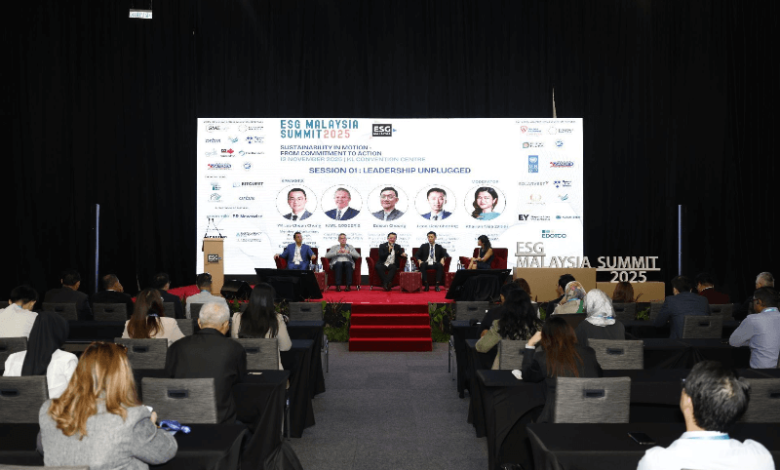
ESG Malaysia Summit 2025 ran as a working-style gathering in Kuala Lumpur, built around policy direction, corporate readiness, and delivery timelines. Speakers and delegates moved between plenary sessions and smaller rooms where the real discussions happened, the kind with notebooks open and phones buzzing.
The Summit carried a simple message: ESG reporting and execution cannot stay as side projects. It has to sit inside budgets, audits, procurement rules, and board oversight.
Key Themes and Discussions Highlighted at the Summit
Climate risk stayed on top of the agenda, but the conversation did not stop at emissions charts. Talk kept circling back to data, controls, and accountability. Several sessions focused on how firms document energy use, supplier practices, workplace standards, and governance decisions in a way that stands up during audits. And yes, the room kept returning to a familiar tension. Businesses want clarity and time, regulators want consistency and comparability, investors want disclosures that hold steady across quarters. The push and pull was obvious.
Supply chains got plenty of airtime. Not in a vague way. Discussion touched practical headaches like supplier questionnaires, inconsistent data templates, and the awkward moment when a vendor sends a “certificate” that looks like a PDF made in five minutes. That kind of thing wastes weeks.
Major Outcomes Driving Malaysia’s National Sustainability Agenda
The Summit closed with a clearer national sustainability agenda direction, structured around reporting discipline and sector implementation. Delegates spoke about tightening internal systems, standardising disclosures, and linking sustainability action to measurable indicators. The tone leaned into “do the basics properly” work: define ownership, set baseline metrics, review progress, repeat.
Several attendees referenced the need for consistent alignment across agencies, exchanges, and industry bodies, so companies do not face conflicting requirements. That point landed well, because confusion creates delays, and delays create compliance panic. It is a cycle many teams know too well.
H2: Public–Private Collaboration Strengthened Through New ESG Partnerships
Public–private cooperation featured as a practical route to speed up implementation. Conversations leaned toward joint programmes, shared training, and sector guidance that stays usable for mid-sized firms, not only the largest listed groups. The Summit also surfaced collaboration plans that aim to reduce duplicated efforts, like multiple stakeholders asking for the same dataset in slightly different formats. That duplication drains time and patience.
A noticeable shift appeared in how partnerships were discussed. Less ceremony, more “who owns the next step”. It sounded like real work, not photo-op work. Some participants even admitted that coordination is messy, and it stays messy unless somebody keeps chasing.
Sector-Specific ESG Developments Announced During the Summit
Industry-specific pathways came up repeatedly, including heavy industry and manufacturing. The steel sector, in particular, was discussed in relation to ESG adoption and industry coordination. A Letter of Intent involving Malaysia Steel Institute was referenced in Summit updates, signalling attention on ESG practices inside emissions-intensive value chains. The reason is straightforward. Heavy industry faces tougher scrutiny on energy use, safety, and supplier controls, and it often carries larger transition costs.
Other sectors surfaced in side discussions too: logistics, construction, consumer goods, and finance. Each has different pain points. Logistics teams worry about fleet data and subcontractors. Construction teams worry about contractors, waste, and site practices.
How the Summit Aligns Malaysia With Global ESG Reporting Standards
A major thread centred on alignment with global sustainability reporting standards, including IFRS S1 and IFRS S2-style expectations around sustainability and climate-related disclosures. The phrase “global comparability” appeared often, though it usually came with a sigh. Global alignment can reduce friction in trade and capital markets, but it also raises the bar for data quality.
The Summit discussions stressed process discipline: documented methodologies, assurance readiness, and consistent definitions across business units. It is boring, but it works. One can feel the shift when teams stop arguing about language and start arguing about controls, owners, and evidence.
Regional ESG Cooperation and ASEAN-Level Opportunities
ASEAN cooperation entered the frame as a way to keep regional expectations closer, so companies operating across borders do not run ten reporting playbooks at the same time. Cross-border supply chains are already complicated. Adding scattered ESG definitions does not help anyone.
There was also interest in wider regional engagement beyond ASEAN, linked to trade relationships and market access considerations. The practical angle showed up here: stronger regional alignment can reduce repeated reporting requests and make supplier onboarding smoother.
Capacity-Building Initiatives and Education Programmes Introduced
Training and capability-building came up with surprising urgency. Many companies still rely on a tiny ESG team that doubles as “reporting team”, “comms team”, and “internal auditor team”. That setup breaks under pressure.
Summit updates referenced education and training support, including an ESG Malaysia Education Hub style approach meant to build skills in reporting, climate disclosure, and implementation planning. The focus stayed on practical learning: templates, workflows, assurance checklists, and sector examples that reflect day-to-day constraints.
Impact of the Summit on Malaysian Corporates and SMEs
The Summit’s strongest impact may show up in internal planning cycles. Large corporations are likely to tighten reporting lines, improve data capture, and engage suppliers earlier. SMEs face a different reality. They often feel ESG requirements arriving through customer requests, tender rules, and bank questions, sometimes all at once.
A simple snapshot seen across many conversations looked like this:
| Business area | What changes after the Summit | What teams likely do next |
| Reporting and audit | Clearer templates, stronger evidence trails | Map data owners, fix gaps, plan assurance |
| Procurement | More supplier screening and documentation | Update vendor forms, track compliance evidence |
| Operations | Better tracking of energy, waste, safety | Set baselines, run monthly reviews, assign owners |
Expert Insights and Industry Reactions From the 2025 Summit
Industry reactions ranged between cautious optimism and blunt realism. Many professionals welcomed clearer expectations, because ambiguity creates rework. Yet, several side comments carried frustration about tight timelines and uneven supplier readiness. A familiar complaint appeared: “Reports look polished, but the back-end data still needs cleaning.” That line could apply to many firms.
A few practitioners stressed that governance will decide success or failure. Not posters, not slogans. Governance as in board oversight, internal controls, escalation routes, and consequences for missed deadlines.
FAQs
1. What did the ESG Malaysia Summit 2025 focus on after the closing sessions in Kuala Lumpur?
It focused on practical ESG execution, reporting routines, and clearer alignment to a national sustainability agenda.
2. How can Malaysian SMEs respond when large customers ask for ESG disclosures during tenders?
SMEs can start with basic data logs, assign one owner, and use simple templates for consistency.
3. What does alignment with global ESG reporting standards mean for Malaysian corporates in practice?
It means stronger documentation, repeatable methods, and evidence that can hold up during assurance checks.
4. Why did heavy industry receive attention during the ESG Malaysia Summit 2025 discussions?
Heavy industry faces higher scrutiny on emissions, safety, and supplier controls, so implementation needs tighter coordination.
5. What changes are likely inside companies after ESG Malaysia Summit 2025 concluded with a clear agenda?
Expect clearer reporting lines, stronger procurement checks, and more frequent internal reviews tied to measurable indicators.