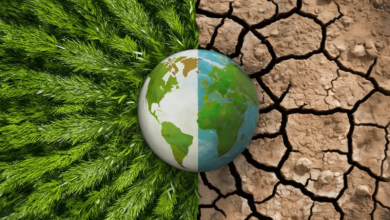
Hope or Hype? Desert Greening Projects
Claims of desert greening result in climate and food security, but do they provide it? See practical examples, advantages, drawbacks, and do hope to surpass hype.

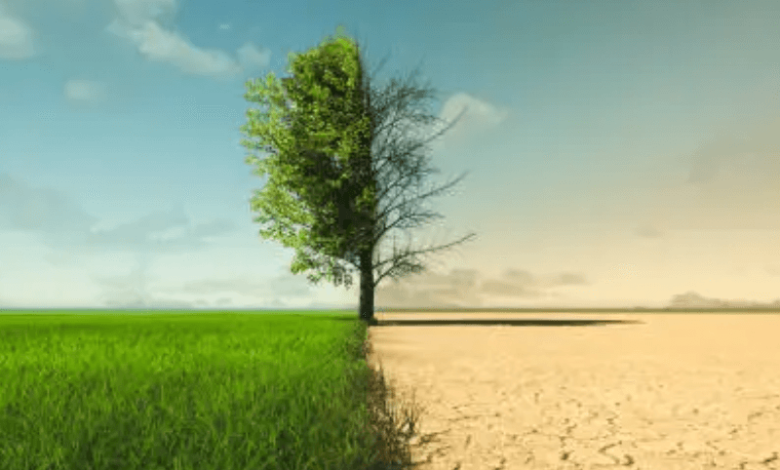
Deserts are growing, climatic demands are increasing, and countries are in competition to reclaim eroded land. In this regard, desert greening initiatives have become ambitious solutions that will transform the unproductive landscapes into productive ecosystems. These measures purport to fight climate change, improve food security, and restore biodiversity, with massive tree-planting efforts,solar-powered desalination farms, and so forth. Critics, however, caution that other projects simplify complex ecosystems, use the little water available, or focus on the appearance rather than the difference. The paper will attempt to examine the issue of whether desert greening projects are real climate solutions or ambitious ideas with concealed risks, focusing on real-life examples, advantages, and constraints.
Why Desert Greening Projects Inspire Global Optimism
Climate Change Mitigation
The enthusiasts claim that the desert greening initiatives will aid in capturing carbon dioxide by the vegetation bushes, and thus greenhouse gases in the atmosphere would be reduced. Afforestation on a mass basis is commonly advocated as a natural ecological measure that can be in line with global climate objectives.
Food and Economic Security
The arid regions can be opened up to agriculture by greening them. Israel and some of China demonstrate how drip irrigation and salt-resistant crops can provide workplaces, help to increase local incomes, and decrease food imports.
Biodiversity Restoration
Other greening initiatives in the desert are looking at the recovery of indigenous species of plants instead of planting alien trees. This will stabilize soils, decrease the occurrence of dust storms, and help sustain wildlife that is adapted to dry land.
Technological Innovation
The greening of deserts at the modern level is based on the application of high-tech instruments: AI-controlled irrigation and solar desalination, and precision farming. These inventions render the projects more efficient as compared to the previous water-intensive efforts.
Some examples of prominent projects are:
- The Three-North Shelterbelt Program of China (Great Green Wall).
- Agriculture model in the Negev Desert of Israel.
- The Saudi Green Initiative of Saudi Arabia.
- The Great Green Wall across the Sahel in Africa.
The Dark Secrets: Troubles of Expectation Turn to Hype
Water Scarcity Concerns
Large numbers of desert greening initiatives need a significant amount of water. In areas that are already water-stressed, the use of water to irrigate greenery can burden the communities and the ecosystems.
Ecological Imbalance
Introduction of non native species can disrupt delicate desert ecosystems. This has been criticized as deserts are not empty, but are fine-tuned systems capable of being harmed through aggressive greening.
Short and Long-Term viability: Gains vs. Long-Term.
There are cases where projects start off well but die as soon as funds run dry, or the attention given by politics or the maintenance. Green zones will be converted to poor land very fast unless there is a long-term plan.
Greenwashing Risks
Massive desert greening programs are occasionally employed to enhance national image or cancel paper emissions without necessarily tackling the underlying causes, such as fossil fuel addiction.
Verdict: Hope, Hype, or a Careful Balance?
There is nothing like a miracle cure and nothing like a complete myth regarding desert greening projects. They can be really beneficial when they are based on science, local ecology, and sustainable use of water. Nevertheless, they will become costly decorations at the expense of solutions when motivated by spectacle instead of substantive content.