Inside Copenhagen’s Cloudburst Design And Water Storage
Copenhagen’s cloudburst plan transforms roads and parks into flood-holding basins, proving that surface storage can outperform costly underground drain expansion.

Copenhagen learned the hard way that “just build bigger drains” is a losing game. When the 2011 cloudburst hit, the city’s pipes and combined sewers could not keep up, and streets turned into fast channels for dirty floodwater. That shock pushed Copenhagen into a different mindset: treat rain like something you guide, slow, and temporarily host, not something you rush underground and hope for the best.
How Copenhagen’s Sponge Parks Beat Bigger Drains In Real Storms
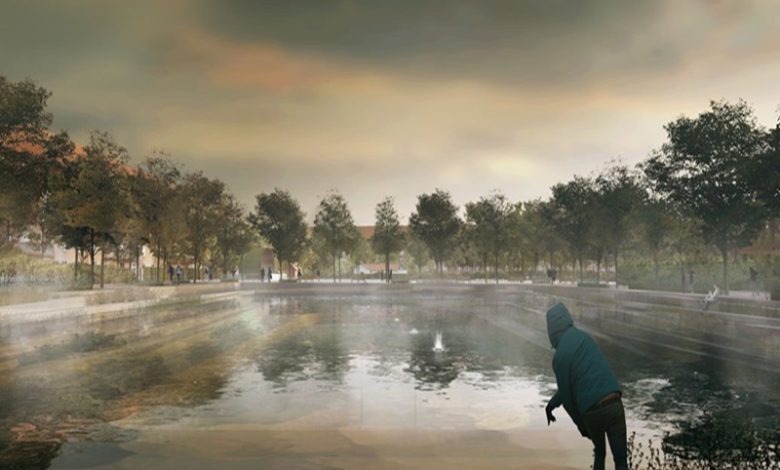
A bigger drain only does one job: move water away. A sponge park does three jobs at once: it stores, slows, and releases water on purpose, while still being a normal public space on dry days. Copenhagen’s Cloudburst Management Plan leans into blue-green design, using streets, curbs, parks, and open basins to carry cloudburst water safely at ground level, then sending it to storage areas and, later, onward when systems have capacity again.
The best-known example is Enghaveparken. On a sunny afternoon it looks like a regular neighbourhood park, but it is built like a hidden bowl. During a cloudburst, gates and low walls help keep water inside the park, turning play areas into temporary retention space instead of letting water pile into basements and shops. Reporting around the project notes that the park can hold roughly 25,000 cubic metres of water during extreme rain, and it also includes smaller storage that can be reused for irrigation in drier periods.

The Street Itself Becomes Part Of The Drainage System
Copenhagen’s cloudburst streets are not just prettier streets. They are shaped to guide runoff along safe routes: permeable surfaces, planted swales, lowered planting beds, and raised kerbs that steer water away from doors and into basins. Places like Sankt Kjelds Plads and nearby corridors show how removing hard asphalt and adding dense planting creates space that can flood briefly without damage.
This is the quiet advantage: parks are “expandable” in a way pipes are not. You cannot cheaply widen a whole sewer network every time rainfall risk changes. But you can design many small, distributed places to take water for a few hours, then give the city time to drain down. That is why Copenhagen has built and planned hundreds of projects that mix tunnels with surface solutions, instead of betting everything on underground capacity.
FAQs
1) What is a sponge park in simple words?
A park designed to hold stormwater temporarily, then release it slowly after rainfall peaks.
2) Why not just build bigger drains everywhere?
Bigger drains cost more, disrupt streets, and still fail during rare, intense cloudburst extremes.
3) How does Enghaveparken help during floods?
It becomes a controlled basin, storing water safely inside the park, protecting nearby buildings.
4) Do sponge parks help in dry weather too?
Yes, stored rainwater can irrigate plants, reduce heat, and support greener public spaces.
5) Are sponge parks enough without tunnels?
No, Copenhagen combines surface storage with tunnels to move and manage water citywide better.