Why Beijing’s Air Shifts: Falling PM2.5 Yet Rising Ozone And What Comes Next
Beijing’s clean-air gains reveal a twist: ozone rises while PM2.5 declines. Learn what drives this trend, how chemistry shifts work, and the next set of controls authorities plan.

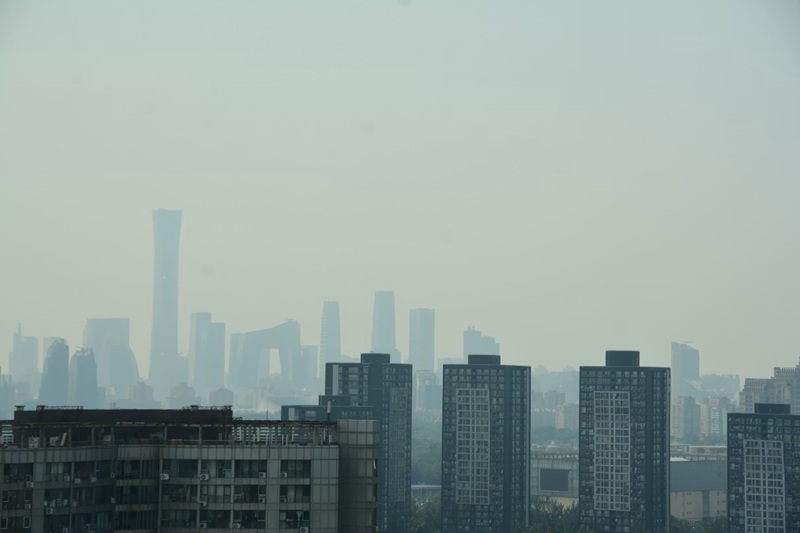
Beijing’s air story is no longer just about smog. PM2.5 has dropped sharply over the past decade, but ground-level ozone remains a stubborn summer pollutant, and in some periods it has continued rising. That sounds contradictory, but it is a known atmospheric chemistry problem: cleaner air for particles does not automatically mean lower ozone.
Recent policy signals from China now reflect this shift, with officials explicitly calling for coordinated PM2.5-and-ozone control instead of treating them separately.
Why Ozone Can Rise Even As PM2.5 Falls In Beijing
PM2.5 and ozone behave differently. PM2.5 is a particle pollution problem, while ozone is formed in sunlight through reactions involving nitrogen oxides (NOx) and volatile organic compounds (VOCs). When PM2.5 falls, the atmosphere often becomes clearer, allowing more sunlight to drive photochemical ozone formation.
Some studies on Beijing and China also point to nonlinear chemistry, where reducing NOx alone in a VOC-limited urban setting can sometimes worsen ozone before it improves.
The Chemistry Shift Policymakers Are Now Chasing
This is why “co-control” is the new policy keyword. Xinhua and Reuters both reported that China’s air strategy now emphasizes coordinated management of PM2.5 and ozone, along with stronger forecasting, early warnings, and updated emissions standards.
Officials also highlighted mobile sources, which contribute a large share of NOx and a meaningful share of VOC emissions nationally. In practice, that means tighter vehicle and machinery standards, cleaner logistics fleets, and more freight shifting from road to rail and water.
What To Watch Next In Beijing
The next phase is less about one pollutant and more about ratios, timing, and seasons: VOC controls (especially industrial/solvent emissions), smarter NOx reductions, and regional coordination across the Beijing-Tianjin-Hebei corridor.
This is harder than the earlier PM2.5 crackdown, but it is also more targeted and science-led. A useful recent official signal on Beijing’s PM2.5 progress is Xinhua’s post on X.
FAQs
1. Why is ozone a problem in Beijing now?
Because particle pollution improved faster, while ozone chemistry remains nonlinear, seasonal, and harder to control citywide.
2. Does lower PM2.5 always mean healthier air?
Not always, because ozone can still spike during sunny periods even when particulate pollution declines.
3. What causes ozone in cities like Beijing?
Sunlight reacts with NOx and VOC emissions from vehicles, industry, solvents, and regional sources.
4. Which policy focus comes next after PM2.5 cuts?
Coordinated ozone-PM2.5 control, tighter vehicle standards, VOC reductions, and stronger forecasting systems nationwide next.
5. Is traffic policy alone enough to reduce ozone?
Usually not, because ozone also depends on VOCs, weather, and regional transport across areas.